
News release
When every word matters: A look inside training with the BC RCMP’s Crisis Negotiation Team
December 12, 2025
-
Nanaimo, British Columbia
From: British Columbia RCMP
On this page
Content
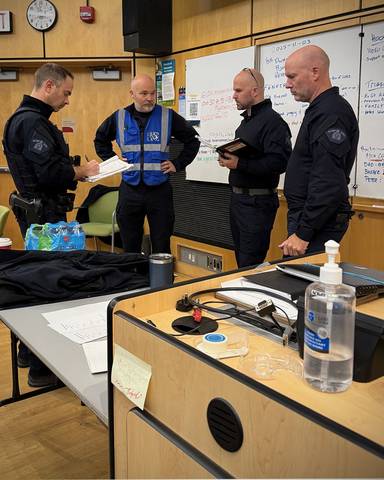
It starts with a fictional scenario designed to feel real: reports of shots fired at a post-secondary institution and an armed suspect barricaded inside the building with a hostage.
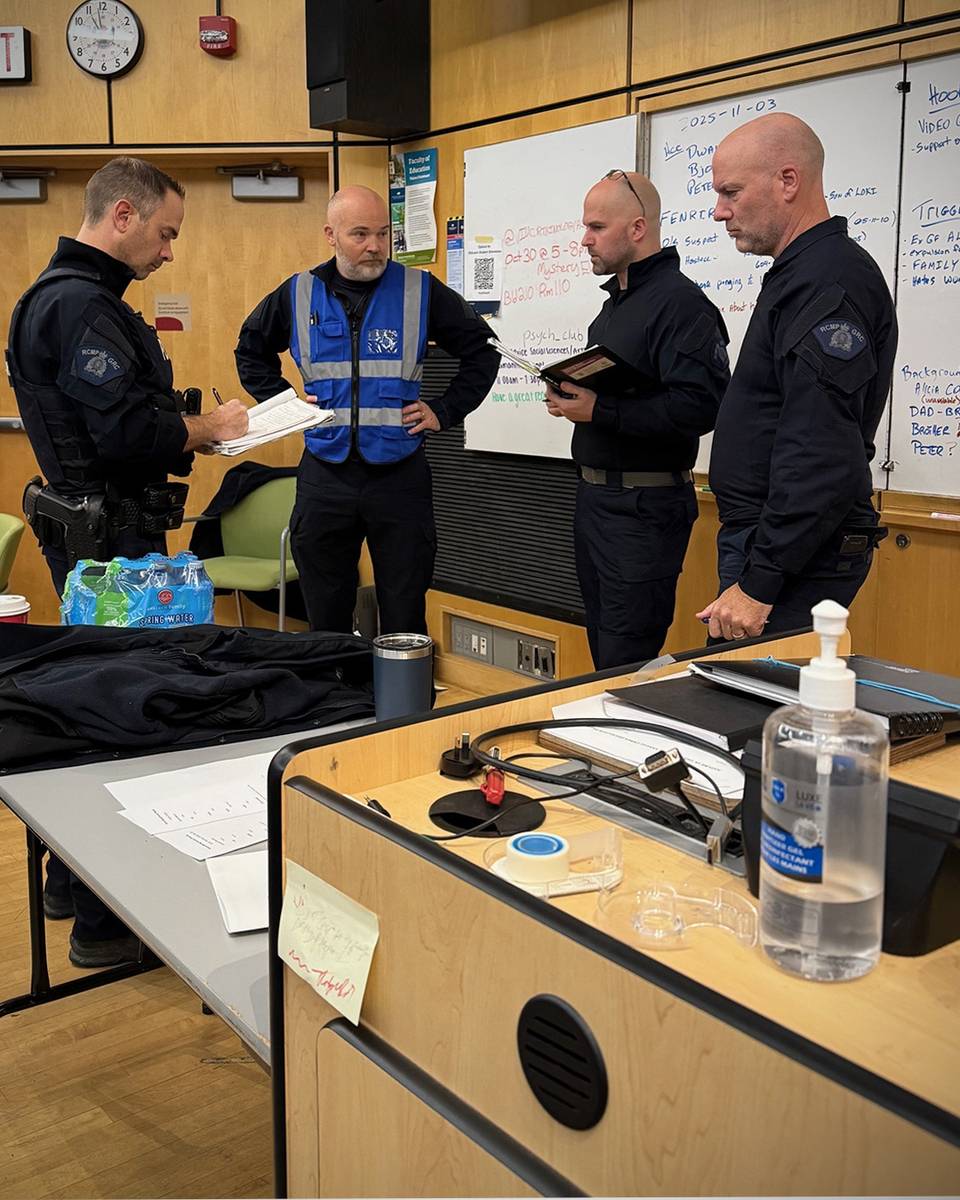
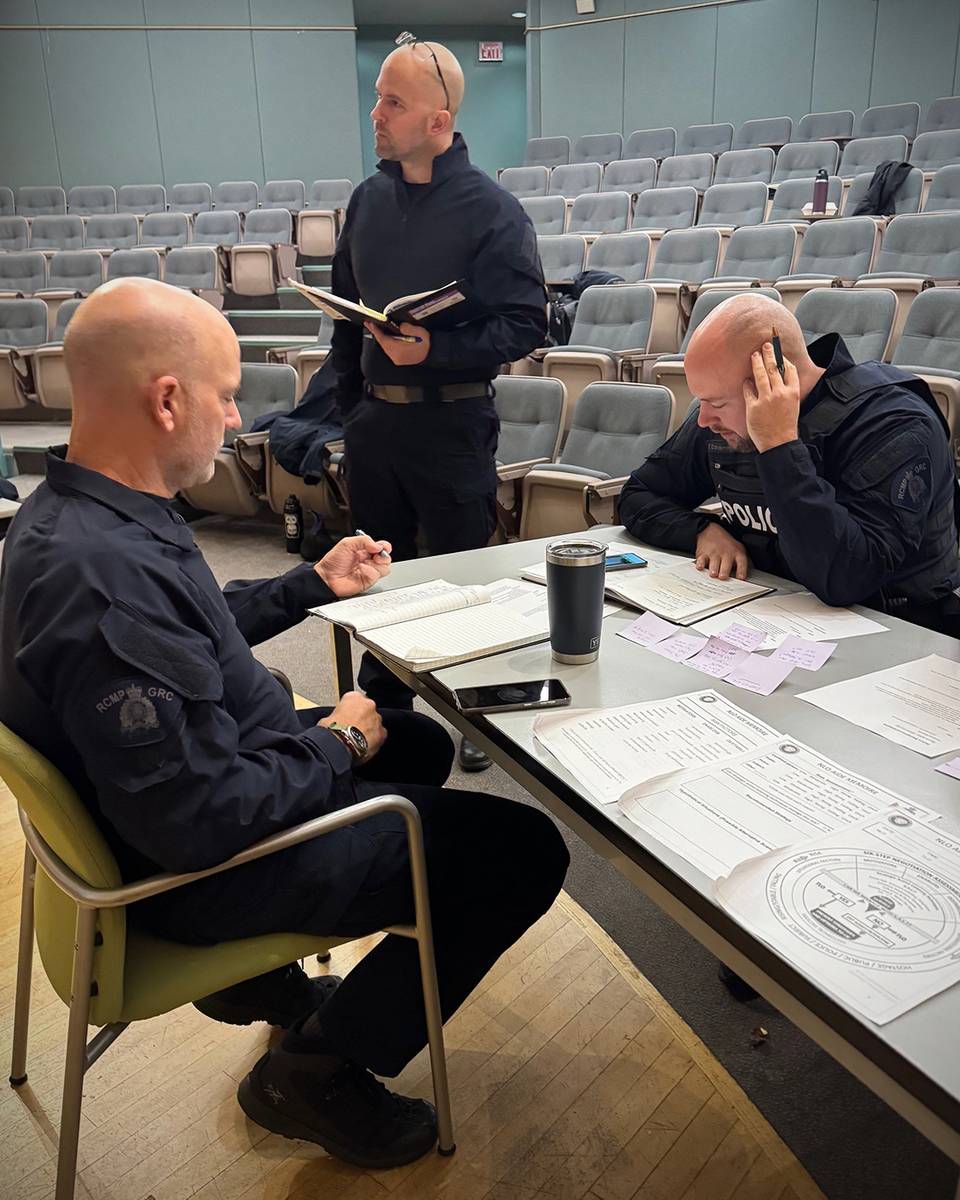
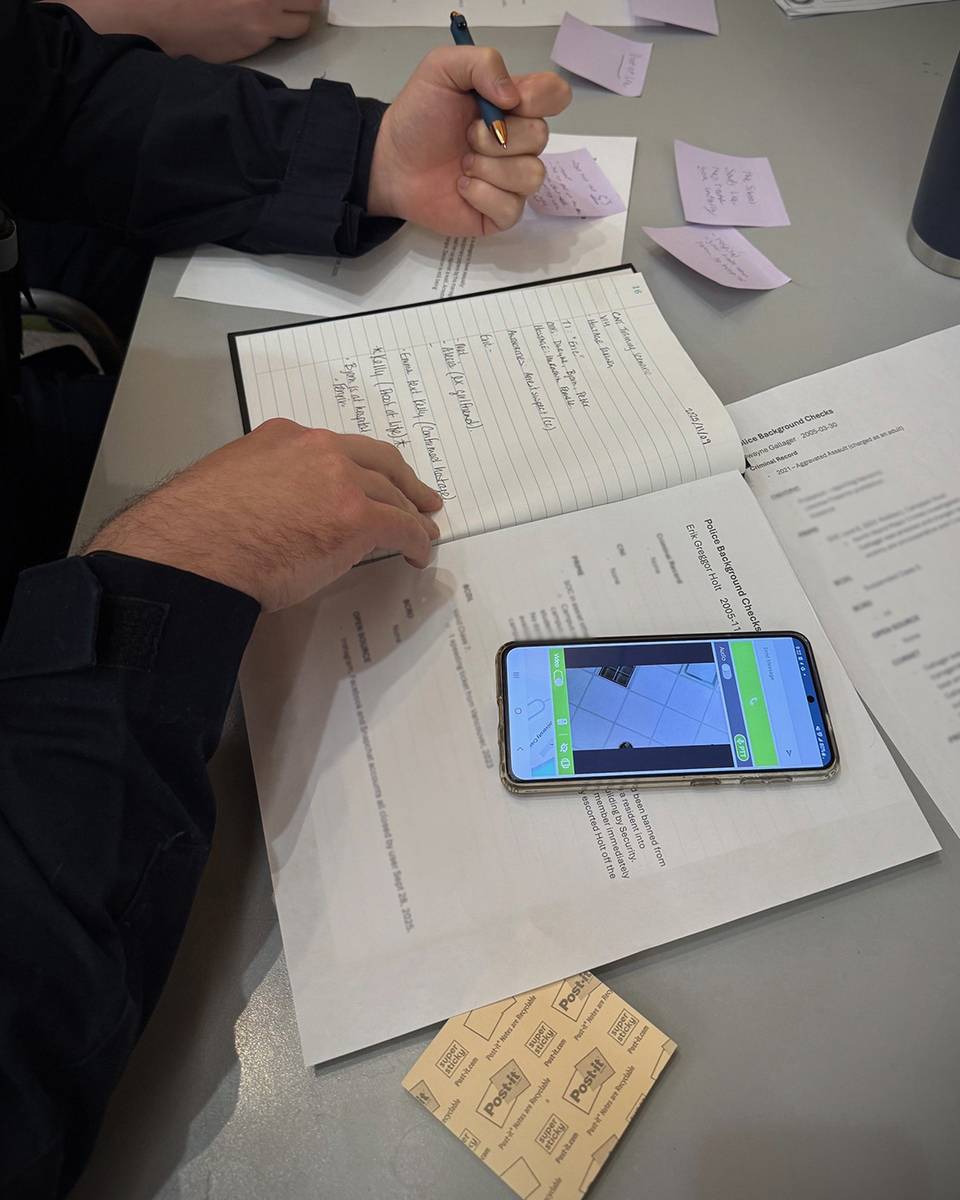
As the training exercise unfolds, members of the Emergency Response Team and Vancouver Island District Crisis Negotiation Team work together to plan, communicate and manage the operational pressure that comes with a high-risk call, with the goal of resolving the situation as safely as possible for everyone involved.
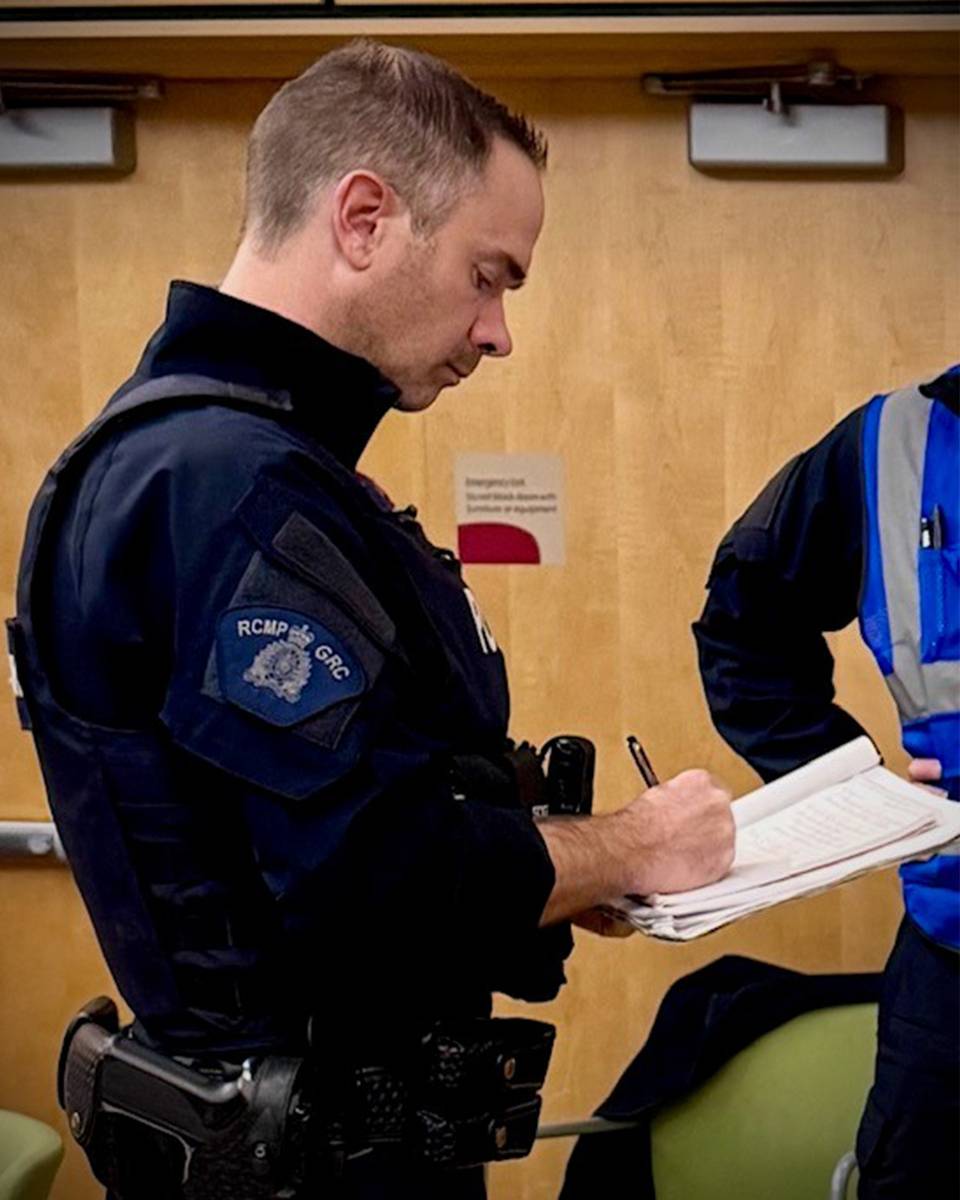
The units, which are part of the BC RCMP’s Critical Incident Program, met at a Nanaimo campus in November 2025, running two days of intense training scenarios meant to feel real, thanks to students from Vancouver Island University who volunteered as actors. The training brought teams together with a primary focus on critical de-escalation skills for the 20 RCMP Crisis Negotiators based across the Island.
Cst. Brent Shemilt stepped into the makeshift command centre as primary negotiator for one of the training vignettes.
“Every situation we go into is dynamic, and in crisis negotiation every word matters,” he says. “There’s information coming in and going out nonstop. The communication and listening piece is so important. It's not a matter of a lone wolf negotiator on the phone and that person just magically decides to come out. As someone newer to the team, I am thinking through every word that’s said. There’s a lot to it, which is why this type of hands-on training and ability to practice with multiple team members is so important.”
Providing calm during crisis
Teamwork is a major aspect of crisis negotiation, with a full callout generally requiring four negotiators, each with distinct roles, plus specialized support from other experts such as psychologists. Team members in BC balance their negotiation duties with their regular RCMP roles.
Calls where negotiators are frequently utilized can include people in crisis, high-risk warrant executions, kidnappings, and armed and dangerous suspects who have barricaded themselves or who are being uncooperative with law enforcement.
Sgt. Jill Swann leads the Vancouver Island Crisis Negotiation Team.
“For people in these high-risk situations, it can be overwhelming to see things like the big armored trucks, the lights and the sirens, and what can feel like chaos. So we try to be that calm voice saying ‘this is for everybody's protection, and everybody cares about you.’ When we train using scenarios like this, it gives us the opportunity to bring everyone together and to practice and demonstrate what happens in the real world.”
One of the scenarios the teams worked on centred around the release of the hostage.
“There are a lot of things that can go sideways quite quickly. They are very tense moments where anything can be misinterpreted, and when you have confirmation someone is coming out, it can be tempting to rush it,” explains Sgt. Swann. “An important teaching point for us is to create a safe, solid and well-organized plan for their release. It benefits the hostage, the subject, the public, and the police officers.”
Negotiators also practiced the delivery of items such as food and water, which can be complicated to coordinate but can be an important step in building trust and creating engagement between the negotiator and suspect.
“When you do something like a food delivery, it’s a way of keeping your word and helping meet someone’s basic needs, especially in a situation that might be quite lengthy. It shows that we can keep our word without surprises, and it ultimately helps create rapport as we work towards a safe resolution,” says Sgt. Swann.
Listening as a tactical skill
Despite common assumptions, both Sgt. Swann and Cst. Shemilt agree it’s listening, not talking, that matters most during crisis negotiations.
“People generally assume you need to be able to talk the stripes off a zebra, but it’s exceptional listening skills and the ability to be genuine that come first. People who are in a state of crisis, they need someone to listen and understand,” says Sgt. Swann.
“It’s crucial for de-escalation, and I think it’s amazing how many Members are already very good at it, because listening is part of the foundation of what we do as police on a daily basis,” adds Cst. Shemilt.
Ready for the next call
With nearly 100 RCMP Crisis Negotiation Team members across BC, these specialized officers are always ready to answer the call for help, no matter where or when a crisis is unfolding.
“Our goal is always the safest possible outcome, and training like this ensures our teams are prepared to support that, no matter the situation,” says Sgt. Dave Fouche, Division Coordinator for the E Division Crisis Negotiation Team, who is also a negotiator himself.
For Sgt. Swann, who has been a crisis negotiator for more than 20 of her 29 years of service with the RCMP, her work with the team has been one of the most rewarding aspects of her career.
“I know for many of us it’s a natural calling. It’s the desire to help, to serve, and to connect with people. We have seen changes to equipment, technology, how we gather intelligence, but what hasn’t changed is working as a team, knowing how to pivot, and the feeling that comes with helping a high-risk situation resolve safely.”
Image gallery
Quotes
“People generally assume you need to be able to talk the stripes off a zebra, but it’s exceptional listening skills and the ability to be genuine that come first. People who are in a state of crisis, they need someone to listen and understand.”
Sgt. Jill Swann, Vancouver Island District Crisis Negotiation Team
Related products
Contacts
British Columbia RCMP
778-290-2929