
Indigenous RCMP officer turns pain into purpose
By Tanya Buhler
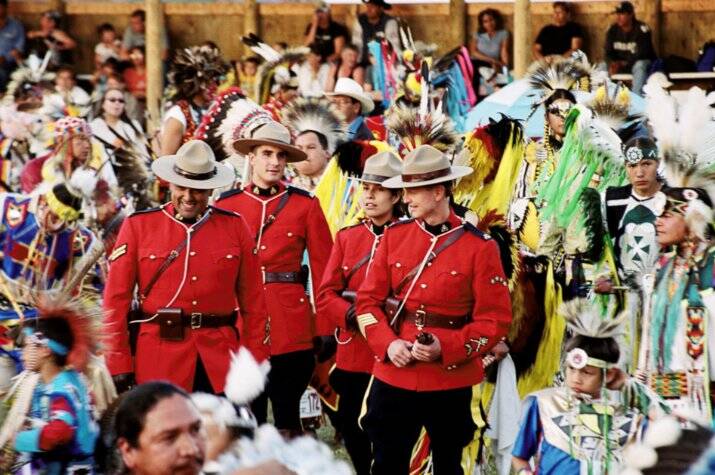
Corporal Noon and three colleagues at the Lac La Biche Pow wow in Alberta
Image by Courtesy of Corporal Noon
June 19, 2026
Content
Growing up in a First Nation community in Saskatchewan, Corporal Heather Noon faced adversity early on. The road to becoming a Mountie was fraught with challenges, setbacks, and disappointments including becoming a teen mom and being a survivor of the residential school system. But her story is one of resilience - how she built a solid foundation on years of hardship and empowerment.
Early years
Noon's earliest memory of being sexually assaulted was at age three. The abuse continued throughout her youth and was perpetrated by six different men. At that early age, Noon didn't have full understanding of what happened to her, but she says she remembers feeling deep shame and guilt.
In grades 6 and 7 Noon was sent away to residential school.
"It was just a strange place where you had to follow strict rules; even everyday things like eating, sleeping, and school happened without the warmth of home," she says.
Her parents, also survivors of residential school, didn't have the capacity to provide her the emotional support she needed then and life became about survival. Despite her early trauma, Noon grew up with hope to become a police officer, which was first sparked by the positive interactions she had with police officers growing up.
"I remember seeing police officers come to my house to visit and have tea and bannock with my mom and dad," recalls Noon. "I remember feeling safe when they were around."
She later found inspiration to pursue the RCMP from the Canadian television show North of 60, which featured a fictional remote town in the Northwest Territories and the Indigenous character and RCMP officer Michelle Kenidi.
"She was strong and in this position of authority," says Noon. "Above all, she embodied strength through service."
A setback
Shortly after graduating from high school Noon was ready to apply to become a Mountie. But life had other things in store when she unexpectedly became a mom and chose to stay home for a year to raise her son.
After this challenge, she thought that the career she dreamed of was forever out of her grasp. But with encouragement from an RCMP recruiter and the support of her parents, she participated in a summer program for Indigenous youth that was held at Depot -the RCMP training academy. It was a turning point for her; participating in the program gave her the confidence and determination to do what it took to apply to the RCMP.
In 2001, 20-year-old Noon arrived at Depot as a new recruit to discover that she was part of an all-Indigenous troop of recruits from Saskatchewan.
"The experience gave me hope that the RCMP was genuinely interested in embracing Indigenous officers," says Noon. "And that made me feel accepted and part of the team."
After graduating, she was sent to North Battleford, a town just one hour outside her home community.
Unpacking trauma
Working North Battleford presented a big challenge for Noon. She was often working cases of abuse and arresting or investigating people having committed these crimes. Sometimes, she even personally knew the accused. She became aware how trauma, especially inter-generational, impacted the community.
Never having confronted her own trauma, the experience became very triggering, and Noon made a goal to transfer to another detachment as soon as possible.
"I was only 20 years old and like many other indigenous women, I carried personal and intergenerational trauma; but I was also committed," says Noon adding that she felt that her pride and confidence in the organization would support and help motivate her to keep going.
Trying transfer
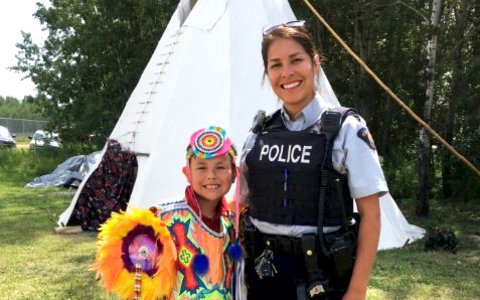
Image by Felicia Harris
At her next posting in western Canada, Noon experienced bullying, racism, and harassment from her own colleagues. She says she realized years later that it was the individuals, not the organization itself, that perpetuated this behavior. Nonetheless, she recounts feeling lost in the structure for an exceptionally long time.
"I didn't expect to be treated like this by my own co-workers," says Noon. "I entered policing whilst trying to develop my identity, confidence, and voice. I was definitely struggling."
Despite feeling alone, Noon believed in herself. She believed she was capable. The thought of doing this for herself, her sons, and the communities she served continued to motivate her to move forward on her career path.
Community love
In 2020 Noon worked on the central coast of British Columbia in the remote town of Bella Coola. It was a posting she still remembers fondly for the friendships she forged and the way the community helped enrich her policing career.
Because it was an isolated posting, she purposely engaged in the community to forge connections: she learned everyone's name, asked to be called by her first name, and made sure to truly listen to people.
"I was reconciling the RCMP and Bella Coola by building relationships," says Noon.
Noon knew the people had embraced her when some Elders in the community told her they, and many others, felt safe when she was on duty.
The positive feedback gave her more confidence and helped her contribute to and communicate with the public more effectively. It was the first time she felt this way since dreaming of being a police officer when she was a child. She started thriving.
"That was one of the first times in a long time when I felt like I was my authentic self," says Noon.
In 2022, when Noon transferred to a new location, the Nuxalk peoples of Bella Coola honoured her with a parade and gifts -including a woven cedar hat.
Impactful influences
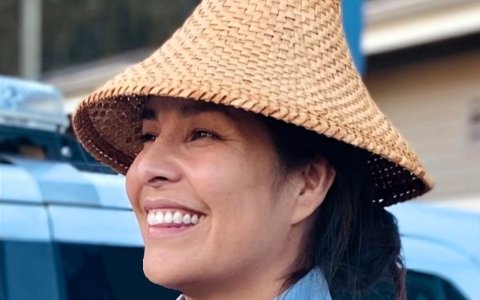
Image by Felicia Harris
After serving in remote British Columbia, Noon moved to the RCMP's Strathcona detachment near Edmonton, Alberta. There, she met her mentor, Sergeant Dale Bereza. Noon credits Bereza for recognizing her abilities and skills and guiding her to learn and find opportunities to continue developing as a police officer. Under his mentorship, her confidence flourished and she learned to use her voice to feel seen and heard.
An equally important person in Noon's career was her recruit field trainer, now-retired Corporal Steve Claus. His genuine understanding of her experiences and the childhood trauma encouraged Noon to finally confront her past and seek help. Working with professionals has helped her build the strength and the capacity to help people who are going through similar experiences.
"I'm grateful that I'm in a better place now with my mental health," she says.
Building and becoming
March 2025, Noon moved to Ottawa and joined the Outreach and Engagement Unit with Indigenous Policing Services and learned to use her own experiences to better serve people.
"The support I can offer comes from a place of knowing," says Noon, adding that by having experienced the pain of trauma she's able to help build supports for people who have experienced the same, by sharing her story so others do not feel alone. She says she didn't have that growing up and is glad to be able to give it to others.
Before the final bow
In December, after almost 25 years with the RCMP, Noon worked a four-week relief duty in Sanirajak, Nunavut. The experience felt like a full circle moment from her days watching a town just like the one on North of 60.
"As an Indigenous RCMP member, I wasn't just inspired by that role anymore, I was living it," says Noon. The little girl who endured so much hardship had grown into the compassionate, resilient, and purposeful leader she used to watch on TV.
"I just want to be proud that I made a difference," says Noon. "I want to share my story -not to dwell on hardship, but to show that it is possible, when Indigenous women are seen, supported and valued, that those coming behind me don't have to endure what I did to find their voice."