
Saskatchewan RCMP prioritizes community and officer safety during wildfires
By Jennifer Liu
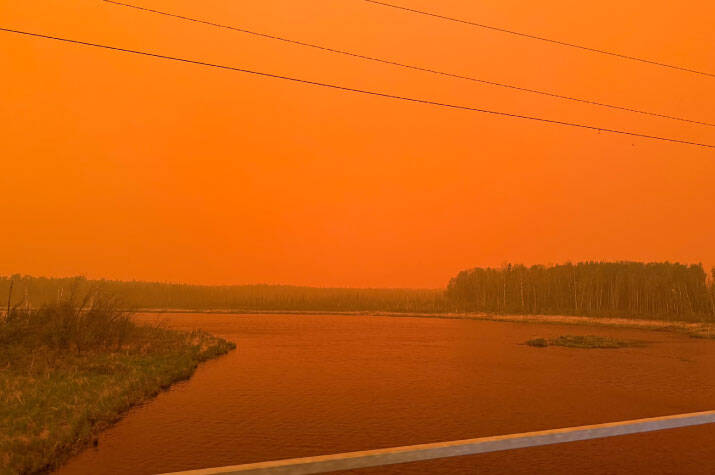
This summer's wildfires left a dark orange glow over the La Ronge area in Saskatchewan.
Image by Derek Eberle
February 26, 2026
Content
When a wildfire threatened public safety in the tri-communities of La Ronge, Saskatchewan, the local RCMP sprang into action to protect the community.
This past year, while much of Canada was dealing with the haze from wildfire smoke, small communities across the country were scrambling to deal directly with those fires. In northern Saskatchewan, the tri-community area, which includes La Ronge, Air Ronge and the First Nations communities of Lac La Ronge were dealing with the worst fires in their history.
Although the RCMP doesn't fight fires firsthand, it is crucial in protecting the homes and property of affected communities. With 1,000 service calls received each month, La Ronge RCMP Detachment, in northern Saskatchewan, is notable for being the second-busiest detachment in the province. Last summer's emergency evacuation order, triggered by raging wildfires in northern Saskatchewan, went far beyond the usual workload. Staff Sergeant Derek Eberle is the commander of La Ronge detachment.
“The general public doesn't realize how crucial it is to let us do our work, or understand the true efforts and cost,” says Eberle. “This is our little piece of the pie in the overall emergency response.”
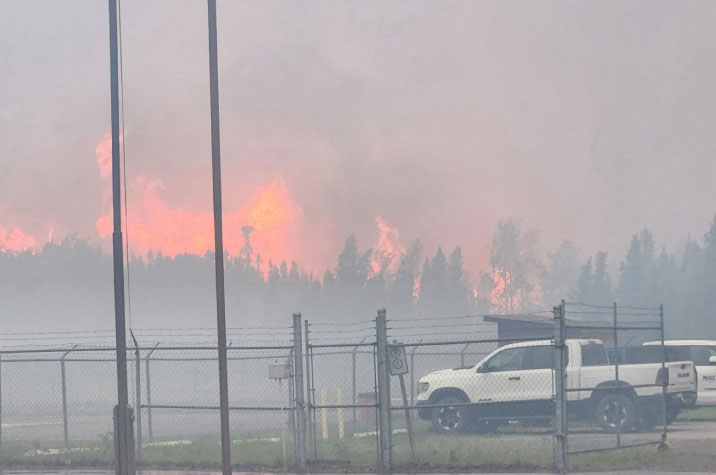
Image by Derek Eberle
Propane fire
After one fire erupted in the southwest portion of the detachment area in early June, powerful winds soon blew ashes that ignited new ones scattered throughout the whole area. “The winds wreaked havoc,” says Eberle. In the turmoil, it was impossible to know where the next blaze might spring up, and fleeing inhabitants would often find themselves driving along stretches of highway with trees burning on both sides of the road.
The biggest threat to the community happened on June 12. “RCMP members on nightshift spotted a fire next to the propane factory in La Ronge's industrial zone,” Eberle says. At 4 a.m. they contacted Eberle, who speed-dialed the Saskatchewan Public Safety Agency. They dispatched firefighters to the scene within 30 minutes. Disaster was averted.
“To this day, I say if it wasn't for the RCMP, we would have lost a considerable amount of this town,” Eberle says. “The quick response by the RCMP gave the fire fighters a fighting chance which was outstanding that they dealt with it without loss.”
Fire scenes
Even with the worst threat averted, several blazes still loomed across the wider detachment area. Under bone-dry conditions, fire activity is unpredictable. Eberle describes chaotic scenes of fires burning all around nearby communities, with needles from burning pine trees getting blown for kilometres and sparking new fires. He says he's heard from first responders, even those with 25 years of experience, that they've never seen ashes travel that far, or under such peculiar conditions: generating searing heat absent of smoke, and in 95 km/h winds, whipping flames into infernos reaching over 15 metres into the air.
“When you're driving down the main street of La Ronge and you have to go into the opposite ditch because of fire, it definitely forces a realization and a reckoning with nature,” says Eberle.
Looking back on the worst fire in La Ronge's history, Eberle is relieved that there were no human casualties. “This crucial outcome required close collaboration with trusted partners,” Eberle says.
While the campaign to save lives was successful, Eberle points out that there is always room for improvement. This was one of 61 fires burning across 625,039 hectares, he says. Despite heroic efforts, at least 89 structures were lost to the flames.
Collaboration and communication
Superintendent Devin Pugh is the officer in charge of RCMP Support Services in Saskatchewan. He oversaw the Emergency Operations Centre command structure for the organization's wildfire response in the summer of 2025. Together with the RCMP's emergency response efforts, Pugh's priority is ensuring the safety of residents as much as the safety of officers.
He echoes Eberle's remarks on the importance of working with provincial partners, especially because fire forecasting had projected a bad season ahead.
“To know that, at the height of the fires, we were still receiving trusted, consistent, and accurate information from our partners proved very beneficial for the RCMP,” Eberle says. “Faced with these voracious wildfires across Saskatchewan, close communications really helped us avoid injuries and deaths collectively.”
Heeding evacuation orders
When significant threats to public safety erupt in Saskatchewan, the RCMP works closely with their emergency-response counterparts across the province. With operations running 24/7, RCMP officers can work up to 15-hour-long days.
“Our job is the law enforcement side of things, to not tie up those resources,” says Eberle.
When fires burn, telecommunications infrastructure often goes out of service, as do water filtration systems. While the RCMP has backup communications systems for emergency response, members of the public risk losing all forms of connectivity. Compounded by difficulty seeing, breathing, and escaping because of the active fires, the best course of action is to leave town before it's too late.
Pugh also recommends double-checking whether emergency updates are from trusted authorities and sources.
“It's important to ensure that information is credible, especially when the stakes are so high,” says Pugh. “Photos of burning buildings from social media might grab your attention, but are they current? Are they from a far-off town? Are they AI-generated?”
While the vast majority of residents followed public advice to leave the danger zone, a small number of people chose to stay on their property - until it was nearly too late to escape to safety.
To those who defied evacuation, Eberle had a blunt message: “We want to avoid the worst outcome: asking loved ones to provide DNA samples of those they lost after the fires before they can be reunited. If residents choose to stay until it's too late, we won't be able to rescue them.”
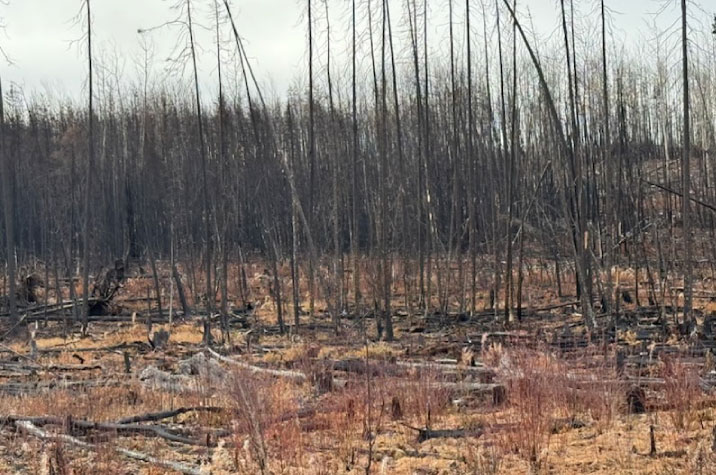
Image by Derek Eberle
The path ahead
In preparation for the future, efforts will be undertaken to clean up some of the flammable debris, bulldozing trees in vulnerable areas, and otherwise keeping ditches and roads clear.
“It's the North, so you're going to experience this cycle again,” Eberle says.
And now that the dust has settled, Eberle notes that he looks forward to the spring, when the vegetation will show signs of regrowth through the rocky cover. In the Canadian Shield, nature is determined to persist through adversity.
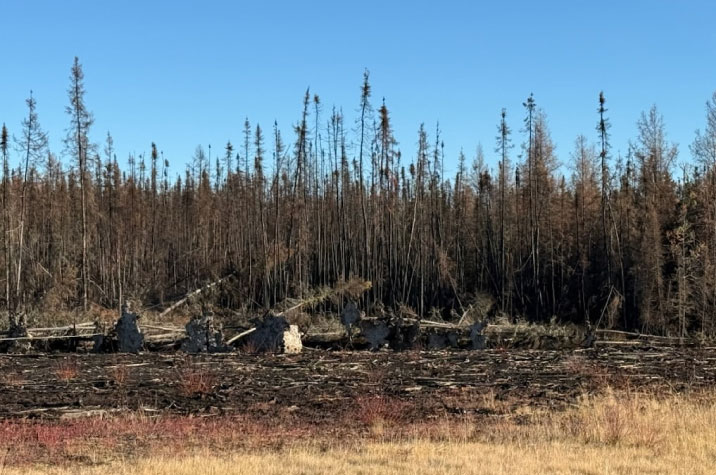
Image by Derek Eberle