
F Division Reconciliation Strategy
On this page
- Saskatchewan RCMP's shared journey towards Reconciliation
- Saskatchewan RCMP's Reconciliation journey: Background
- National Reconciliation efforts
- Saskatchewan RCMP's Indigenous Policing Services mission
- Saskatchewan RCMP's Reconciliation aspirations: Overview
- Working together in communities
- Saskatchewan RCMP: A way forward
- Footnotes
Saskatchewan RCMP's shared journey towards Reconciliation
Reconciliation demands more than words. The Saskatchewan RCMP's commitment to Reconciliation is a roadmap for action grounded in respect and a promise to continue fostering relationships rooted in trust and understanding. Through meaningful engagement with Indigenous peoples and communities, we lay the foundation for partnerships that create lasting change.
Saskatchewan RCMP's Reconciliation journey: Background
The Saskatchewan RCMP continues to prioritize Reconciliation with Indigenous peoples in the province. This represents a permanent commitment to foster respectful, trusting relationships with Indigenous people, communities, and employees through good faith, honour, and fairness. This shared journey was created to provide a roadmap for action that is meaningful to Indigenous people and communities the Saskatchewan RCMP serves. Footnote 1
Saskatchewan RCMP officers and employees regularly connect with Indigenous people, Elders, and community leaders to help us better understand how we can enhance our relationships and improve collaboration. This engagement has been essential to developing a solid foundation for our Reconciliation efforts.
Some of the engagement that contributed to this shared journey includes:
- Conversations about Reconciliation between Saskatchewan RCMP's Indigenous Policing Services (IPS) and Indigenous people and groups from around Saskatchewan
- Engagement questions about Reconciliation sent directly to all Indigenous Chiefs in the province
- Meetings with Elders in various Indigenous communities throughout the province
- Requests for feedback from Indigenous RCMP employees and Indigenous advisory committees
- Conversations about Reconciliation with Indigenous students and teachers at the First Nations University of Canada, the University of Saskatchewan, and Saskatchewan Polytechnic
- Meetings with students and teachers about Reconciliation at several public schools throughout the province
- Requests for partner feedback, including from leaders at the Federation of Sovereign Indigenous Nations (FSIN), The Office of the Treaty Commissioner, and Métis Nation Saskatchewan
Working in Indigenous communities is more than policing. It's about building trust, honouring traditions, standing alongside and working with members of the community. It's a privilege that comes with deep responsibility and commitment.
National Reconciliation efforts
The Saskatchewan RCMP's Reconciliation shared journey was designed to focus on local Reconciliation issues and concerns while aligning with and supporting the national strategic direction.
Keep treating Indigenous people as partners. Keep knocking at our doors 'just for a visit' and we will invite you in for tea and bannock sooner or later. Don't give up on us even if we turn you away a few times. By being invited in for tea and bannock, we accept you as a friend. This must not be taken lightly.
Saskatchewan RCMP's Indigenous Policing Services mission
Our mission is to support Saskatchewan RCMP employees in providing professional, proactive and culturally appropriate policing services to Indigenous people and communities in Saskatchewan. With our guidance, education and collaboration, we will assist in the advancement of Reconciliation and improving overall relationships between Indigenous people and the RCMP.
Our shared Reconciliation journey begins with taking that initial step. The first step is to start understanding the truths of First Nations, Inuit and Métis peoples. Another crucial step is recognizing and learning about our own history with Indigenous communities. Our shared journey involves listening, gaining understanding and actively working towards meaningful change.
Saskatchewan RCMP's Reconciliation aspirations: Overview
Reconciliation defined
Part of engagement was reaching out to Indigenous people to understand what Reconciliation means to them. Their perspectives helped create a definition of Reconciliation that reflects what is important to Indigenous people and communities the Saskatchewan RCMP serves:
Recognizing the truths of the past and our shared history; respecting and embracing the Indigenous culture, beliefs, and history; and rekindling trust with Indigenous people and communities.
Reconciliation aspirations and initiatives
In November 2020, a project team was assembled to review the Reconciliation strategy and feedback provided by Indigenous leaders and partners. This allowed for an honest assessment of the Saskatchewan RCMP's approach to Reconciliation. In early 2025, this document was reviewed again and evolved from a strategy with objectives, to a shared journey with aspirations.
Aspiration 1: To increase Indigenous representation and recruitment efforts within the Saskatchewan RCMP
- Utilize the Federal Student Work Experience Program (FSWEP) to provide Indigenous students with employment opportunities in detachments
- Promote the Police Observer Program and Auxiliary Program to Indigenous youth to provide first-hand policing experience and knowledge
- Promote Indigenous Pre-Cadet Training Program (IPTP) on annual basis and partner with Canadian Military and their Bold Eagle Program; the IPTP has seen numerous graduates apply for the RCMP and successfully graduate
- Since 2022, Saskatchewan RCMP's Indigenous Recruiting Unit (IRU) has assisted in sending 14 youth to the IPTP for three weeks of training at Depot
- Use strategic approaches to promote recruitment in remote areas of the province, such as having Indigenous recruiters attend the First Nations and assisting with the application process
- Following the creation of the IRU in 2022, recruiters have attended more than 80 events across the province, along with hosting a number of virtual events where applicants can connect with recruiters
- Since 2022, 21 Indigenous applicants from Saskatchewan have been hired as Regular Members and attended training at Depot
Aspiration 2: To focus on internal Saskatchewan RCMP training and education to create a better organizational understanding of Indigenous people, culture, language, ceremony and history
- Revitalize the Saskatchewan RCMP's Indigenous Policing Services internal intranet page to better provide internal guidance and contact information for training and support on Indigenous issues
- Work with partners to implement training that increases employees' understanding of intergenerational trauma and historic relationship between the RCMP and its Indigenous people
- Create partnerships with organizations in the province for a combined reconciliation effort that aligns with Saskatchewan RCMP's efforts
- Encourage employee participation in local Indigenous cultural events and learning opportunities by partnering with local agencies and identifying upcoming events
- Promote and highlight Reconciliation efforts by the Saskatchewan RCMP to share best practices and opportunities for learning
Aspiration 3: To provide culturally responsive policing services to Indigenous people and communities, and champion the division's successes
- Engage with Indigenous communities to promote and support a Restorative Justice Framework
- Emphasize to local detachments and RCMP employees the importance of Indigenous community familiarization efforts, including learning about local lands, culture and spiritual practices
- Track the division's Reconciliation efforts to meet the Calls to Action and Calls to Justice
- Highlight Reconciliation efforts in our Indigenous communities on quarterly reports and provide these reports to our stakeholders
- Leverage communication resources to highlight Reconciliation efforts
- Gather feedback on Saskatchewan RCMP's Reconciliation efforts from stakeholders such as the Commanding Officer Indigenous Advisory Committee
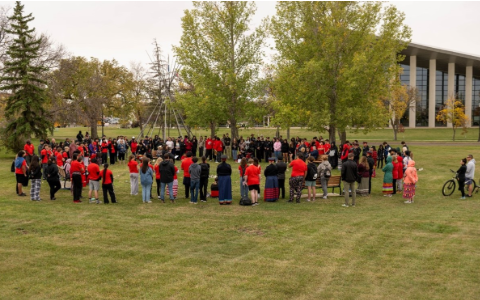
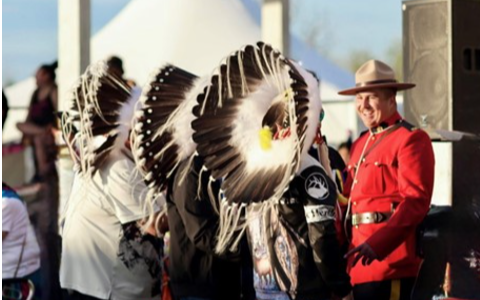
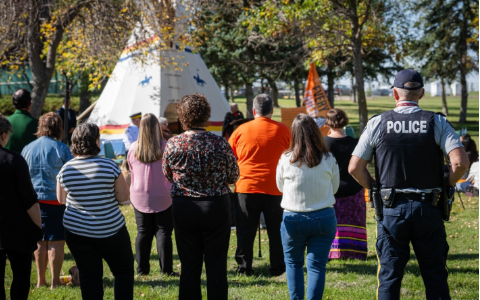
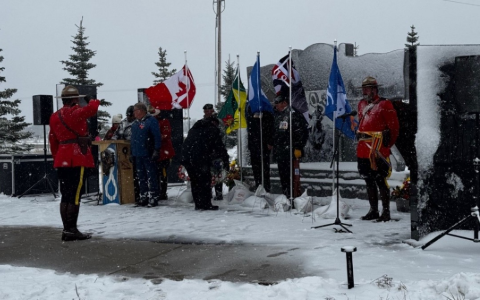
Working together in communities
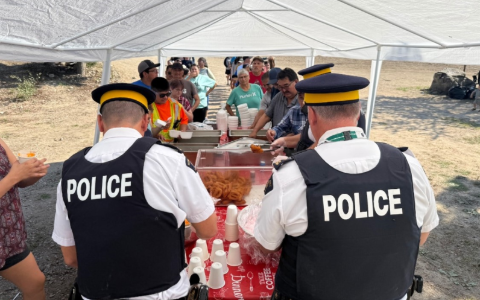
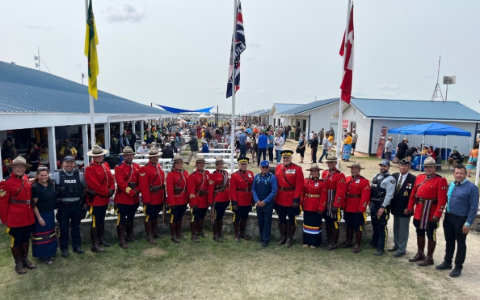
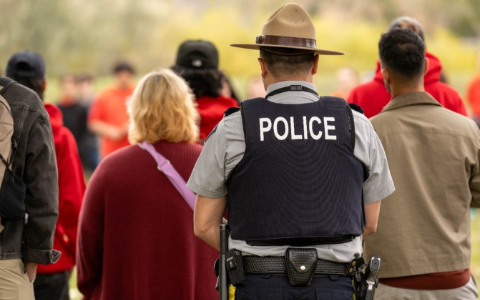
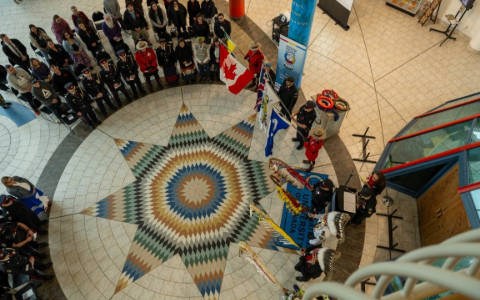
Saskatchewan RCMP participates in various community activities and commemorations to help build and strengthen relationships in Indigenous communities we serve.
Saskatchewan RCMP Indigenous Policing Services, in cooperation with National Indigenous Policing, have successfully integrated a tracking mechanism for all Indigenous community events attended. In 2025, more than 1,100 hours have been documented to date.
In addition to Indigenous Policing's tracking, local detachments also track community efforts and events attended.
Some examples of these efforts include, but aren't limited to:
- Indigenous Perceptions Training, where the primary focus is learning about the treaties of Saskatchewan
- This course is offered twice a year with 20 to 25 participants per class
- Marking National Indigenous Peoples Day
- Louis Riel Day
- Pinehouse Elders Gathering
- Batoche Métis Gathering
- Sisters in Spirit Walk
- Pow wows throughout Saskatchewan
- Truth and Reconciliation Day
- National Indigenous Veterans Day
Image gallery
Saskatchewan RCMP: A way forward
Reconciliation is an ongoing commitment. The Saskatchewan RCMP is dedicated to learning from and engaging with Indigenous people and reflecting on the wisdom they share with us. Saskatchewan RCMP will reaffirm our Reconciliation approach annually to support meaningful relationships with the Indigenous communities we serve.
Saskatchewan RCMP will seek to demonstrate improvement in the following performance measures:
- Public perceptions of the Saskatchewan RCMP's contributions to Reconciliation
- Contract partner perceptions of the Saskatchewan RCMP's contributions to Reconciliation Footnote 2
- The percent of RCMP employees that self-identify as Indigenous
- The number of Indigenous cultural training opportunities provided to RCMP employees
- The number of restorative justice referrals in Saskatchewan
- Date modified: