
News release
The Saskatchewan RCMP’s Provincial General Investigation Section investigates some of the most serious and complex of crimes
July 22, 2025
-
Saskatchewan, Saskatchewan
From: Saskatchewan RCMP
On this page
Content
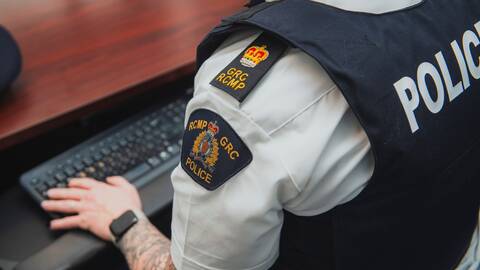
As part of the Saskatchewan RCMP’s Major Crimes Branch, the Provincial General Investigation Section (GIS) takes carriage of some of the most serious and complex investigations in RCMP jurisdiction – which happens to be 99.9% of the geographic area of the province.
These investigations can include serious assaults and attempted homicides, officer-involved shootings (in conjunction with Saskatchewan’s Serious Incident Response Team), kidnappings (including Amber Alert investigations), child abuse and exploitation, significant fraud, serious weapons offences, and sometimes homicides (on behalf of or in collaboration with Saskatchewan RCMP Major Crimes Units), among others.
Officers who work in GIS have specializations in areas such as search warrant and judicial authorization drafting, interviewing, major case management principles (police methodology for managing major incidents), crime scene management and preparing and providing testimony, to name a few.
Supporting RCMP detachments across the province
Saskatchewan RCMP Provincial GIS has offices in North Battleford, Prince Albert, Regina and Saskatoon – strategically located to be able to deploy to RCMP detachments across the province to aid frontline officers with investigations anticipated to be complex, extensive and lengthy. In 2024, the GIS teams across the province worked on over 1,600 files.
Having GIS manage these types of files gives general duty officers the ability to continue to focus on their day-to-day investigations, police within their communities and engage with residents and local leadership.
While GIS may take the lead on certain investigations, they routinely rely on frontline officers to provide local knowledge and expertise – as they’re the ones who live and work directly in the communities served by the RCMP.
Because GIS is a provincial unit, they can analyze data and link crimes that occur across the province and beyond.
Here’s one recent example:
Three charged in bank robbery and string of ATM thefts
North Battleford RCMP's Provincial General Investigation Section (GIS) have laid 64 charges against three people in connection to a Landis bank robbery on November 22, 2024, as well as a string of ATM thefts, and attempted thefts, that took place across South and Central Saskatchewan between November 22, 2024 and January 1, 2025. Read the full story here.
Taking a trauma-informed, victim-centered, and culturally sensitive approach to police investigations
When working with victims of crime, the Saskatchewan RCMP’s General Investigation Section makes a concerted effort to take a trauma-informed, victim-centered, and culturally sensitive approach to investigations.
What does this mean? It means that officers are trained and experienced in understanding the physiological and psychological impacts of trauma, recognizing the signs of and reactions to trauma, avoiding re-traumatization and knowing what supports are available for individuals affected by trauma. This doesn’t only apply to when officers are dealing with victims, but also when dealing with families, communities, fellow first responders or others involved in the criminal justice system, such as offenders. Investigators approach interactions with sensitivity, understanding and empathy.
Taking this approach helps to increase the safety and well-being of all involved; helps promote a better relationship between individuals and police; and ultimately helps to improve the outcomes of investigations.
A number of RCMP investigational policies have provisions built into them specific to victim-centered and trauma-informed processes – some examples of this include the sexual assault, child abuse and domestic violence policies.
National and international investigations and the importance of cross-border partnerships
The work of Provincial GIS often entails investigating in tandem with partner policing agencies and other authorities, including on an international level (such as Interpol or the Federal Bureau of Investigation in the United States).
Here are two examples of cross-border investigations involving Saskatchewan RCMP’s GIS that resulted in charges.
Adult male charged with sexual assault and sexual interference
After the Saskatchewan Internet Child Exploitation (ICE) Unit received a referral from the National Centre for Missing and Exploited Children (NCMEC), North Battleford General Investigation Section (GIS) immediately began investigating. As a result of their efforts a 25-year-old was arrested and is facing seven Criminal Code charges. Interested in reading more? Check out the news release here. This investigation was part of Canadian operation involving the RCMP’s National Child Exploitation Centre, the Ontario Provincial Police and the Sûreté du Québec that focused on online child sexual exploitation in which 106 individuals were arrested and 37 children safeguarded as of March 5, 2025.
Saskatchewan man who fled to Mexico amidst investigation relating to sexual offences against a child extradited to Canada to face charges
A 30-year-old Saskatchewan man was recently sentenced to over 1,400 days in custody plus conditions after pleading guilty to sexual interference (Section 151 of the Criminal Code).
The investigation – which originated in Central Saskatchewan – tracked all the way to Mexico, where the accused fled after being charged. The inciting incidents stemmed back to 2022 when he was charged with sexual assault and other sexual offences against a person under the age of 16 years and, as a result, was arrested by RCMP and released on conditions.
The accused was subsequently charged with additional sexual offences following further investigation after breaching one of his conditions. He was again arrested, then remanded, by the courts and released again. RCMP were made aware of another breach of his conditions. It was at that point in the investigation that police learned he may have illegally fled the country and was in the presence of someone he had victimized.
The Saskatchewan RCMP worked with INTERPOL, Crown Prosecution, and RCMP Liaison Officers in Mexico for 19 months to locate and extradite the accused back to Canada to speak to the serious charges he was facing. Investigators with GIS flew down to Mexico to retrieve the accused. Upon his return to Canada, he was held in custody until January 28, 2025, when he pled guilty in court.
Insp. Ashley St. Germaine, Senior Investigative Officer with Saskatchewan RCMP Major Crimes Branch, says of the international investigation: “Our investigators worked diligently with partners at INTERPOL and in Mexico to locate and bring the accused back to Canada where he could answer to the serious charges he was facing. Yes, the investigation was a lengthy one, but our officers never stopped working on this case and did everything within their abilities to put a stop to this offender’s actions. Part of that means taking the necessary steps to ensure the evidence is solid and prosecutable in court. I’m very proud of the work our investigators did in this case.”