
The most impactful innovations start with a simple observation and question: there must be a better way
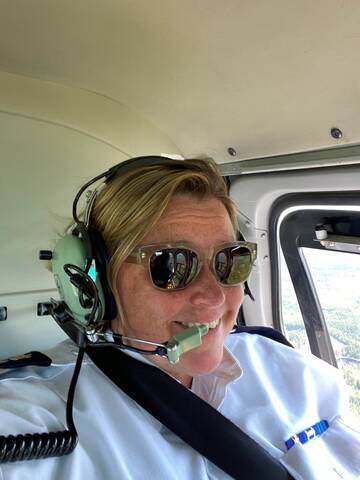
Photo of Chief Superintendent Baher smiling in a RCMP helicopter
The most impactful innovations start with a simple observation and question: there must be a better way.
For more than 34 years of policing, Chief Superintendent Shawna Baher has built her career by looking beyond traditional approaches to policing, transforming challenges she witnessed on the frontlines into solutions that continue to shape public safety across British Columbia.
Growing up in Sparwood, B.C., C/Supt. Baher never envisioned a career in policing, but that changed when a young female RCMP officer arrived in her hometown on her first posting. Close in age and relatability, the officer quickly became a mentor and family friend.
Fresh out of Depot at 21 years old, C/Supt. Baher began her career in Nanaimo, where the fast-paced environment exposed her to every aspect of frontline policing. Surrounded by colleagues she describes as family, she quickly developed a passion for operational policing and investigations. Over the next 15 years, she specialized in drug enforcement, undercover operations, and a variety of frontline roles, building a reputation as someone willing to take on complex and unconventional assignments.
But despite her successes, leadership was never part of her original plan.
It took encouragement from her colleagues who recognized her potential before she considered applying for the RCMP Officer Candidate Program. Her willingness to embrace opportunities eventually led her to become the first female detachment commander of the Vernon/North Okanagan RCMP, also the First female District Officer of Vancouver Island and now also the Southeast District.
"I never really saw myself in leadership roles, someone else saw it in me first,” she explains.
But her most lasting impact may be found not in the positions she has held, but in the innovative solutions she helped bring to policing.
While working in Surrey during the early stages of the fentanyl drug crisis in 2015, C/Supt. Baher and her colleagues saw the growing threat long before it became a public emergency, as officers increasingly responded to overdose calls, she recognized a critical gap.
All police officers needed to carry naloxone.
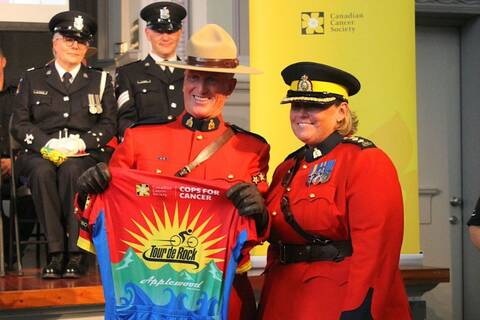
C/Supt. Baher at a Cops for Cancer community event
Drawing from her experience in drug enforcement and frontline policing, C/Supt. Baher developed the business plan that ultimately led to RCMP officers to not only become one of the first police forces to carry naloxone on their duty belts, but today the life-saving medication has become a standard tool that officers use to respond to overdoses and save lives in communities across the country, coast to coast.
"It was one of those moments where you could see what was coming and knew we needed to do something," she said. “Just like right now, if you look at it, we've started carrying naloxone on October 6, 2016. And it's just something that the members know we carry. They just don't know how it got there.”
But her commitment to finding practical solutions did not stop there.
Seeing firsthand how mental health, addictions and policing intertwined, C/Supt. Baher worked alongside health officials and the Provincial Government to improve the mental health car program now broadly known as the Integrated Crisis Response Team(s) and create new programs in cities like Vernon to better serve those who experiencing mental health crises.
From there, after learning about the new technology program called HealthIM, a decision-support tool that helps officers assess mental health-related calls and connect individuals with appropriate services and seeing the success in other provinces, C/Supt. Baher began working with health professionals, policing partners, and provincial stakeholders to bring it to British Columbia.
"At the end of the day, our job is to stop crime and keep people safe," she explains. "Sometimes that means making an arrest. Other times it means addressing the root causes that brought someone into contact with police in the first place."
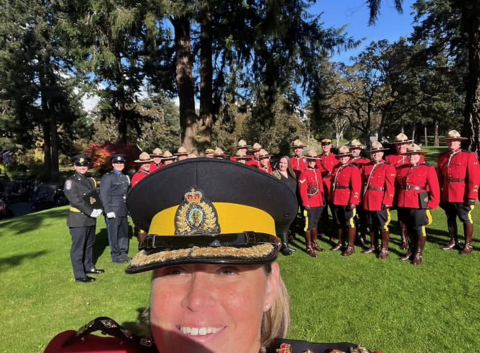
Group photo selfie
Throughout her career, C/Supt. Baher has remained deeply committed to community-based policing. Rather than moving away from detachments and frontline operations, she intentionally sought opportunities like naloxone and HealthIM that kept her connected to the communities she serves, strengthening partnerships, supporting vulnerable people and gave officers better tools to serve their communities.
That same commitment extends to mentorship.
“Throughout my career, people saw potential in me before I fully saw it in myself. Their belief and encouragement helped shaped the leader I am today. I try to pay that forward. When I see someone with promise, I reach out, especially when self doubt is holding them back. Sometimes one phone call is enough to remind someone what they’re capable of and give them confidence to take on a new challenge. I know how much that can matter, one call made that difference for me”, says C/Supt. Baher.
As we celebrate Women’s History Month, we recognize C/Supt. Shawna Baher for her leadership, innovation, and commitment to building safer communities. From helping put naloxone on officers' duty belts to championing new approaches to mental health response, her legacy serves as a reminder that meaningful change often begins with one person asking a simple question:
What if there was a better way?
- Date modified: