
News release
Romance scams are evolving: A.I. is helping criminals steal hearts and money
-
Richmond, British Columbia
From: Richmond RCMP
On this page
Content
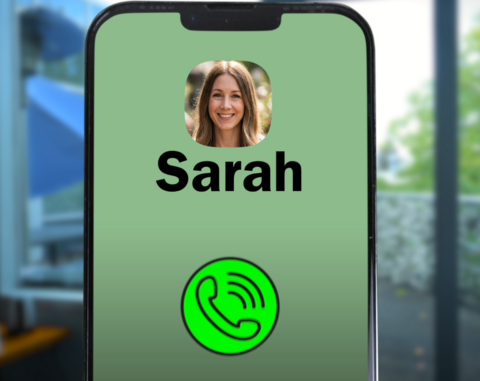
Richmond RCMP is warning residents to be cautious when developing online relationships, as criminals increasingly use artificial intelligence (AI), deepfake technology, and stolen images to deceive victims into sending money.
Romance scams occur when fraudsters create fake online identities and build trust with victims over weeks or months before requesting money. Advances in AI technology now allow scammers to generate convincing photos, videos, and even live video calls, making it more difficult to determine whether the person on the other end is who they claim to be.
Victims are often led to believe they are communicating with an attractive, successful, and caring individual. In reality, they may be interacting with an individual from an organized crime group operating from anywhere in the world.
Transcript
Portions of this video were generated using artificial intelligence (AI).
Video description: A video about Romance scams and how A.I. can be a dangerous tool used by scammers trying to steal your money.
Transcription:
[In a cafe, a man sits at a table and sends a text message on his phone. A giant phone stands on its own beside him, showing his messages. He is texting a woman named Sarah.]
[His message reads: “Can’t wait to finally meet you in person”.]
“I can’t wait to finally meet you in person.”
[Sarah replies: “Me too!” “but my card declined!”]
“Me too!”
“But my card declined.”
[Sarah send another message: “need $1,000 for my flight!”]
“I need a thousand dollars for my flight!”
[The man happily taps his phone to send the money.]
[A notification appears on his phone reading: “Notification: Money sent!”.]
[An incoming video call appears from Sarah. The man answers it.]
[Sarah appears on the video call and speaks to the man.]
“Babe, I love you! But I need your help again.”
[The man replies.]
“What’s going on?”
[Sarah replies.]
“My sister needs emergency surgery and I need five-thousand dollars to help cover her bill. I don’t have anyone else to turn to.”
[Suddenly, the screen glitches and Sarah disappears. In her place we see a scammer. A title appears across the screen reading: “Filter Off”]
“Shoot!”
[The man is very surprised.]
[The scammer sits in his cubicle at the scam center looking at one of his computer screens.]
“My filter’s off!”
[In an office space, other scammers are doing the same thing in their cubicles. A title reads: “Scam centre”.]
[The man shakes his head and taps his phone.]
[On the giant phone we see the man has ended the call. The screen reads: “Call Ended”.]
[The giant phone disappears as the man puts his phone down on the table.]
[On the table, we see the phone shows a friendly RCMP officer. The officer speaks.]
“Scammers use fake identities to win your heart and empty your wallet.”
[Behind the scenes, the scammer uses an A.I. filter to analyze his face. The screen reads: “Creating A.I. filter…” ]
[While the A.I. scans his face, a text reads: “Analyzing face…”]
[The screen shows the filter, which looks like Sarah. As the scammer moves his head to the side, so does Sarah. A text on screen reads “Filter Complete”.]
[The officer speaks to camera.]
“If you or someone you know is talking to a suspicious match, report it to police so investigators can step in.”
[A title fades in reading: “Protect yourself and people you love”. A heart appears beside another title that reads: “Report suspicious online relationships to local police”.]
[A new title appears reading: “Learn more at the Canadian Anti-Fraud Centre”
“antifraudcentre-centreantifraude.ca”.]
[RCMP/GRC copyright notice appears.]
[Government of Canada wordmark with a waving Canadian flag appears.]
"Scammers are becoming increasingly sophisticated, using AI-generated images and deepfake technology to create convincing online personas," said Corporal Bryson. "A photograph, a video call, or even a voice message should not be considered proof that someone is genuine. If someone you have never met in person begins asking for money, gift cards, cryptocurrency, or financial assistance, that should be treated as a significant warning sign."
Consumers are encouraged to be cautious of anyone they meet online who:
- Quickly professes love or a deep emotional connection.
- Claims they cannot meet in person due to work, military service, travel, or an emergency.
- Requests money, gift cards, cryptocurrency, banking information, or financial assistance.
- Asks to move conversations off established dating platforms to private messaging applications.
- Provides excuses when asked to verify their identity through independent means.
Richmond RCMP recommends the following steps to protect yourself:
- Never send money to someone you have not met and verified in person.
- Be skeptical of online profiles that seem too good to be true.
- Conduct reverse image searches on profile photographs.
- Speak with trusted friends or family members about online relationships.
- Stop communication immediately if money is requested.
- Report suspected fraud to local police and the Canadian Anti-Fraud Centre.
Anyone who believes they have been the victim of a romance scam is encouraged to report the incident to Police.
Contacts
Media Relations Officer
Richmond RCMP
richmond_media@rcmp-grc.gc.ca
604-207-5189