
Richmond RCMP Victim/Witness Services
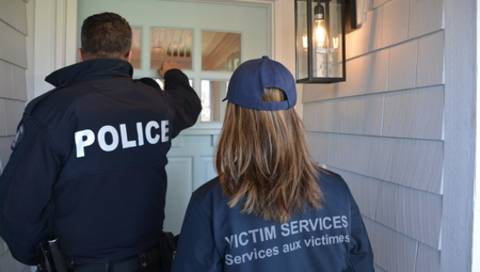
A police officer and a victim services agent at a front door of a home
The Richmond RCMP Victim/Witness Services offered by the City of Richmond and Richmond RCMP provides crime victims, witnesses and their families, and those who are experiencing a trauma with professional, supportive, and timely assistance to lessen the effects of crime and trauma.
Referrals to Richmond RCMP Victim/Witness Services are typically made by the Richmond RCMP officer on scene. However individuals can refer themselves to the program by contacting the Richmond RCMP Victim/Witness Services. Staff are available to assist victims by providing emotional support, information, and referrals, and can assist with Victim Impact Statements and Crime Victim Assistance forms.
Richmond RCMP Victim/Witness Services provides support to individuals for all types of crimes in the City of Richmond which have been reported to police.
Richmond RCMP Victim/Witness Services
Non emergency: 604-207-4799
Emergency: 9-1-1
Richmond RCMP Victim/Witness Services help people understand and deal with the effects of crime by providing information, 24/7 emotional support, referrals to other agencies, and help understanding court proceedings.
They will provide the following support:
- Practical Assistance
- Emergency transportation
- Victim Impact Statements
- Crime Victim Assistance Application Program
- Emergency accommodations
- Victim Notification
- Assist police with Next of Kin Notifications
- Liaison between Crown Council, Police and Victims
- Liaison between Public Health Agencies and School District
- Safety planning
Transcript
Video description: A video demonstrating the role of Victim Services in the community and how they work with police to support victims of crimes.
[An RCMP officer puts up crime scene tape next to an RCMP police car.]
“Who helps those who are dealing with the effects of a crime?”
[The officer puts evidence in evidence bags.]
[A title reads: “Behind the scenes with Victim Services”]
[The officer talks into his radio.]
“That’s where Victim Services comes in.”
[A Victim Services caseworker, talks to the camera. A title appears that reads: “Victim Services Caseworker”]
Victim Services Caseworker
“I’m a caseworker here with the Richmond RCMP Victim Services Unit.”
[The city center of Richmond bustles with activity.]
“Depending on what’s going on in the city, the police may call us to attend on scene…”
[The Victim Services team pulls up in a car in front of a house next to an RCMP police car.]
[Two Victim Services caseworkers get out of the car.]
[The two caseworkers meet an RCMP police officer outside the house and walk towards the house together.]
“...to provide crisis intervention and emotional support to victims or witnesses of a crime or others who may have been impacted by the traumatic event.”
[The RCMP officer knocks on the door. A man answers the door.]
[The Victim Services caseworker talks to the camera.]
“Everybody expresses their emotions differently, so it is important to be non-judgemental and be there with them in the present moment and make them feel heard.
[The RCMP officer and two caseworkers sit across from the man at a dining room table and talk with him.]
[The man listens to them and nods.]
[The Victim Services team continues the conversation with the man.]
[The Victim Services caseworker talks to the camera.]
“We provide follow-ups and share resources out in the community.”
[Two Victim Services caseworkers sit on the couch with the man and show him a folder of resources.]
[A caseworker pulls a pamphlet from the folder.]
[The man sitting beside the Victim Services caseworkers nods.]
“These resources can look like counseling or support groups that may be available to them.”
[An RCMP officer sits behind a work desk. A title reads: “Constable Frank Bryson RCMP Police Officer”]
Constable Frank Bryson
“The Victim Services Team is really valuable to police.
[The two caseworkers sit with the man and comfort him.]
“They are trained to help support victims emotionally…”
[A friendly caseworker speaks with the man.]
[Frank Bryson speaks to the camera.]
“...so we can focus on investigating the crime.”
[The Victim Services caseworker speaks to the camera.]
Victim Services Caseworker
“Victim Services is a challenging job, but…”
[Both case workers sit next to the man. One of the caseworkers comforts the man and speaks with him.]
“...being there in people's time of need and providing them comfort…”
[The Victim Services caseworker speaks to the camera.]
“...and guidance is really fulfilling.”
[RCMP/GRC copyright notice appears.]
[Government of Canada wordmark with a waving Canadian flag appears.]
Crime Victim Assistance Program (CVAP)
CVAP is a financial benefits program offered by the Ministry of Public Safety and the Solicitor General to assist victims, immediate family members and witnesses in dealing with the effects of violent crime. CVAP may help to offset financial loss and assist in recovery from injury. CVAP is part of a network of victim service programs throughout BC. For more information visit: www.gov.bc.ca or call 604-660-3888.
British Columbians who wish further information about the criminal justice system and resources may go to www.justicebc.ca.
If you have been the victim of a crime
Don't hesitate to call police because you think the incident is too insignificant or because your own carelessness may have contributed to your victimization. Calling the police is an important part of protecting yourself and of being a good neighbour. Informing the police about crimes that have occurred is one way of preventing future crimes.
If you witness a crime or strongly suspect one is about to occur
Without putting yourself in danger, carefully note any details which might be helpful to police.
These include:
- Type of crime: automobile theft, assault, etc.
- Location: the street address or nearest cross street.
- Description of the suspect(s): note height, build; color of skin, eyes, and hair; clothing.
- Unusual features, scars or tattoos, and any weapons, tools or vehicles being used.
- Description of property of person(s) being subjected to the criminal activity.
- Don't try to deal with the situation yourself. Call the police - the sooner the better. But even if some time has passed since you witnessed a suspicious incident, it's not too late to call the police.
For more information, visit BC RCMP Victim Services.
- Date modified: