
Finally home: The RCMP identifies missing men
By Robin Percival

DNA double helix.
Image by Shutterstock
October 7, 2026
Content
In 2026 - within the span of a few months – the RCMP gave two families closure they’d waited for decades to get.
Last March, William (Bill) MacKay’s family were told that the RCMP had identified his body. His sister Linda knew that him being deceased was a possibility, but had never given up hope.
“For me it was…oh my God…that answers that. Then I started to cry.”
Bill had died 20 years earlier. His family had last seen him another 10 years before that. For them, there was finally closure after three decades of wondering.
Family roots
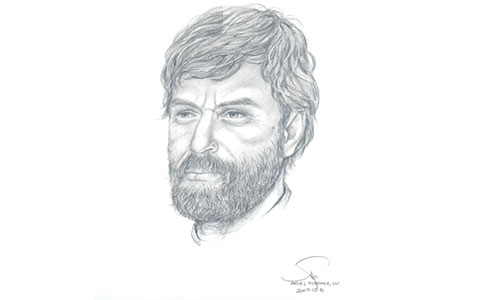
MacKay’s family never considered him to be “missing.” He’d always been a wanderer, travelling from place to place, dealing with personal demons. In December of 2007, he was found deceased in Moncton. New Brunswick RCMP ruled out foul play but could not determine his identity.
The case went cold. The RCMP decided to try an emerging technology called Forensic Investigative Genetic Genealogy (FIGG) that combines DNA profiling with familial research. The RCMP sent his femur to a lab in Texas where technicians created a genetic profile. They uploaded the profile to several public DNA bases that trace ancestry.
“I got this chart showing how they traced it – they went back to 1778,” says MacKay. “I think that’s incredible.”
“It’s a really new technology, but able to save a lot of resources. It's incredibly effective,” says Sergeant Sue Shaw Davis with the RCMP’s National Center for Missing Persons and Unidentified Remains (NCMPUR). But she adds the caveat that when we find a match, the RCMP conducts further testing to definitively confirm identity.
Malpeque Bay John Doe
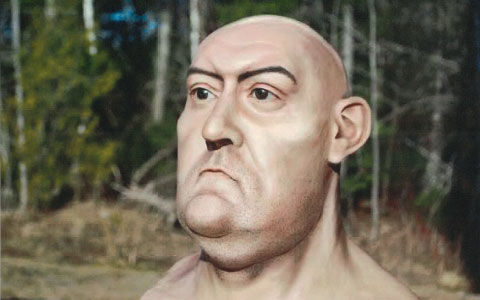
The second identification happened in Prince Edward Island. In the summer of 1997, a fisher discovered a man’s remains in Malpeque Bay. The body was badly decomposed, and investigators could not establish his identity. He was laid to rest in a Charlottetown cemetery as “John Doe.”
Investigators refused to give up. In 2010, they exhumed “John Doe’s” body. Forensic artists created a bust of his skull and face, in the hopes that someone might recognize him. But it would still be another 16 years until he was finally identified – using FIGG.
A few years ago, a sample of the man’s femur was sent to the RCMP’s National Missing Persons DNA Program (NMPDP). When that produced no matches, the RCMP instead sent the DNA for FIGG processing. The resulting Genealogist’s report produced eight family names, one of which was the name of a missing man from Quebec. The RCMP reached out to the Sûreté du Québec, who had taken DNA samples from “John Doe’s” family, who lived in a small city outside of Montreal.
“We have a name, we have a name!” recalls NMPDP Manager Ingrid Mulhig, who worked extensively on this case. “I think this technique has made investigators re-look at old files and see how they should change how they’re investigating.”
“The family was relieved to finally have the confirmation that the body has been recovered,” says Captain Benoit Richard, Sûreté du Québec.
“John Doe’s” family chose not to release his identity publicly.
Canada’s Missing
In any given year, 70,000 to 80,000 people are reported missing to police in Canada. While most are found within days, rare cases can draw out for months or years, with no answers for anguished family members.
In 2018, the RCMP’s launched the NMPDP. This program allows the Data Bank to compare the DNA profiles from missing persons and unidentified remains. Relatives of missing persons are encouraged to submit their DNA (via saliva, cheek swabs, or blood samples) for comparison against existing files.
But when this hits a dead end, FIGG now offers another option. By using public “family tree” DNA sites, police now have another tool to use in their search.
Moving forward
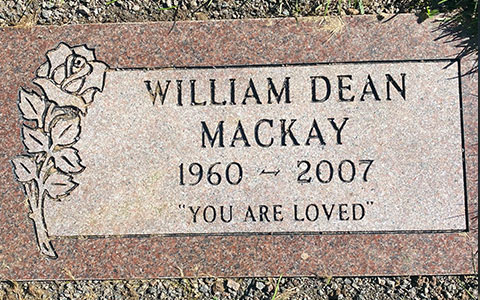
In August, Bill MacKay’s family had a plaque laid for him at his Moncton burial site. They now know that he died of exposure to the cold at the age of 46.
Once the RCMP contacted the family with the news of his identification, Linda MacKay says it brought her comfort to learn that her younger brother had a close-knit community in Moncton who had cared deeply for him.
“There was such an outpouring: “Rest in peace, Billy!””