RCMP honours Indigenous guide
By Julie Plourde with Staff Sergeant (retired) Eric LaFoy
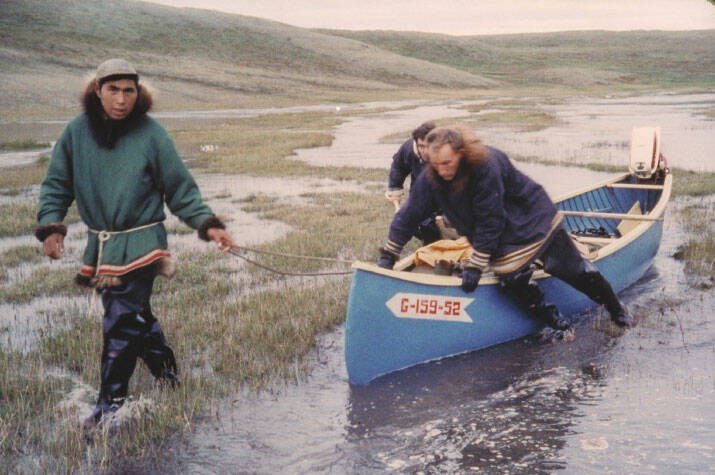
Esau guides Knights and a university student through remote northern terrain in Canada.
Image by @NWT Archives/Robert C. Knights/N-1993-002-0277
September 24, 2026
Content
Imagine a vast, empty winter landscape. There are no roads, no signs, no maps, and you are new to the area. How would you get from place to place? Getting lost could cost your life. That was one of the challenges facing RCMP officers stationed in the far north in the early 20th Century. The solution was hiring locals as guides and interpreters. Today, those local employees are called special constables.
For the RCMP, every employee – past and present – matters. Last year, two retired RCMP officers made it their mission to ensure that one special constable was not forgotten after learning of a colleague who had been buried without a regimental headstone.
The RCMP started hiring Indigenous people as special constables as early as the March West (1874). They filled roles of guides and interpreters for officers who were not familiar with the area. When the Northwest Mounted Police (NWMP) expanded into the Arctic after 1903, many Inuit were hired as special constables to assist the local detachments.
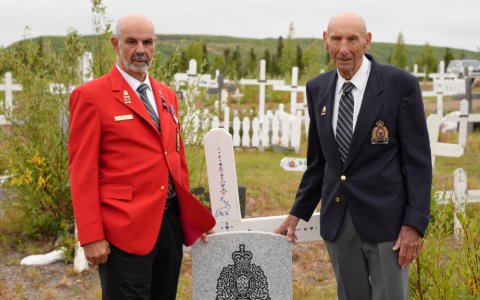
Retired RCMP Staff Sergeants Robert "Bob" Knights and Eric LaFoy are members of the RCMP Veterans Association, which plays a crucial role in filling a sacred duty to keep track of the graves of fallen RCMP officers.
Knights and LaFoy befriended Special Constable Peter Ayaqi Esau, decades apart, during their time working with the RCMP in Sachs Harbour, one of the northernmost RCMP detachments.
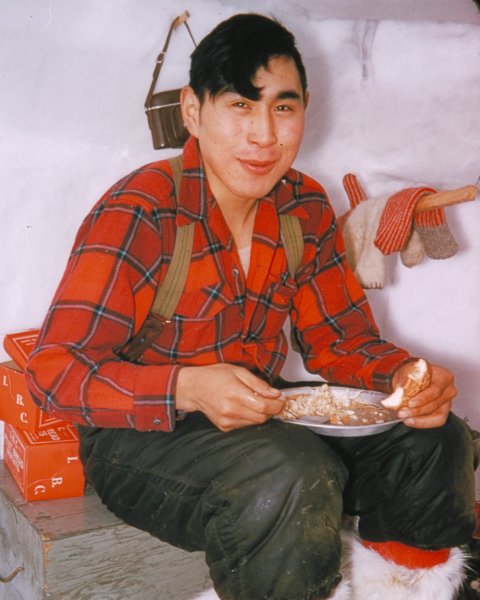
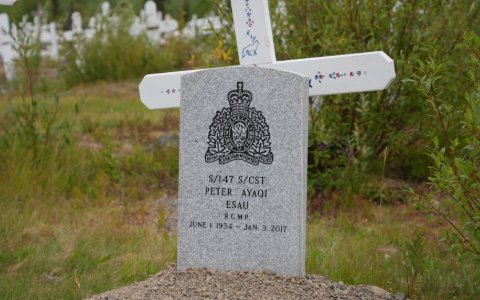
After Esau's death in 2017 at age 82, the two colleagues embarked on a journey to ensure their friend was properly recognized for his contribution to law enforcement, and mark his grave with an RCMP headstone.
"I didn't even know where he was buried," says LaFoy, 78, of his late colleague, whom he befriended on the job in the 1980s.
Guide, interpreter, friend
According to the two veterans, Esau joined the RCMP in 1955 at 21, answering the call for local Indigenous people to serve as guides, interpreters, and links between the RCMP and local community members. Esau was Inuvialuit, Inuit who live in the western Canadian Arctic region, and fluent in both English and Inuvialuktun, making him a coveted employee. He became the first special constable posted to Sachs Harbour. After his policing career, he went on to become the mayor of the community.
Knights, now 93, worked with Esau in the 1950s, early in his career when both men were in their twenties.
"We traveled and did everything together: hunted, fished, worked. And, he was my best friend," says Knights, who served in the Northwest Territories from 1956 to 1962, including two years in Sachs Harbour.
He and LaFoy remember Esau as having been jovial and very friendly.
"He was a great guy to be with, and I enjoyed every minute of our time together for two years," says Knights, adding that he remembers life at that time with great detail and remarkable clarity.
"We referred to them as guides and interpreters; they weren't even called special constables in our time," says Knights. "But that changed. And rightly so, because they were special."
A mission for recognition
Chief Superintendent Dyson Smith, Commanding Officer for G Division, who Knights and LaFoy worked with to secure Esau's headstone, agrees.
"We had special constables all over the North. They kept us alive," he says, emphasizing that they deserve significant credit for helping officers navigate the challenges of policing across the North.
During a casual chat between the two retired officers, LaFoy and Knights swapped tales of their time in Sachs Harbour and realized they both knew Esau. To find out if he was still alive, LaFoy called the Sachs Harbour detachment commander, Corporal (now retired) David Green. Green confirmed that he knew the name, but he thought only one of Esau's children still lived in the community.
Green called back after finding out that Esau had passed away after moving to Inuvik, where he had been buried. Green also reached out to the RCMP detachment in Inuvik, who confirmed the location of Esau's grave. A photo showed that there was no Regimental gravestone.
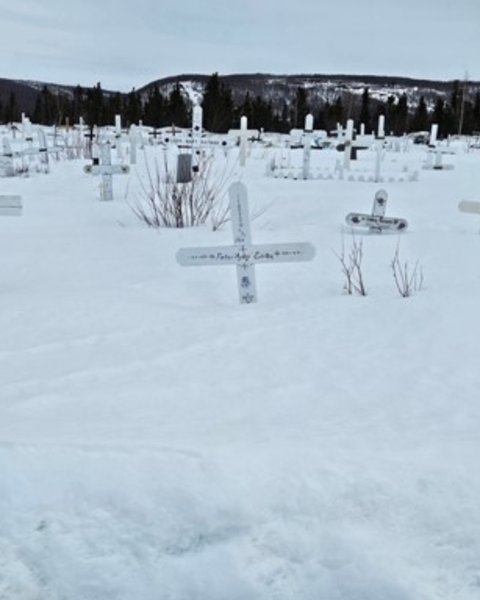
Green put LaFoy in touch with the Warrant Officer in Yellowknife, Staff Sergeant Major Jim Strowbridge, who submitted a request to the Division's Commanding Officer, Chief Superintendent Smith for a Regimental grave marker for Esau.
LaFoy says when approached for help, Smith understood that recognition of the service and contributions of Indigenous special constables was an excellent way to advance reconciliation. Smith approved the request.
Connecting with the family
"None of this would have happened if the family did not approve," LaFoy says.
Strowbridge wanted to find a time to have a ceremony to place the gravestone. He discovered that the family was planning a family reunion in Inuvik for August 2025. The family agreed to include the ceremony in their reunion plans.
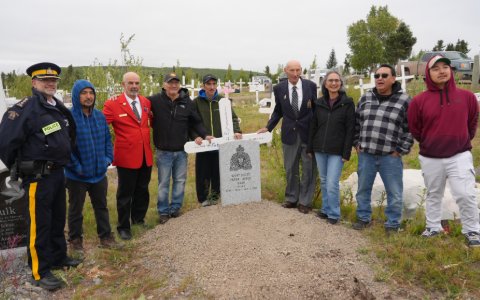
On August 19, 2025, Smith arranged for LaFoy and Knights to join him in Inuvik to finally honour Esau. There, they attended a regimental headstone ceremony honouring Esau at the local cemetery. They met Esau's surviving family members there as well as a few people from Sachs Harbour who joined.
Mission accomplished
"It was a quiet ceremony, but at the same time it was good," says LaFoy. He pointed out that Knights was an avid photographer during his RCMP career and provided a slide presentation of photos that Esau's family had never seen. Knights has donated over 500 photos to the museum in Yellowknife.
With Esau's final resting place finally marked with a gravestone, LaFoy says he's devoting his efforts to recognizing other special constables.
"The special constables are kind of a soft spot for me. I just want their stories to be told," says LaFoy. "And there are so many more."