
Reclamation, revitalization and rebirth – The RCMP’s Indigenous languages journey
By Tanya Buhler
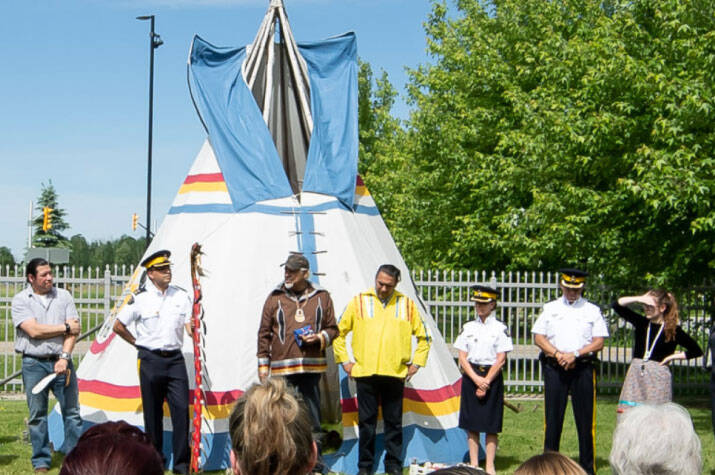
Indigenous individuals lead a ceremony at RCMP headquarters in Ottawa
Image by Serge Gouin, RCMP
September 28, 2026
Content
The honourable former Senator Murray Sinclair once said, “It was education that got us into the current state of relationships with Indigenous Peoples, it will be education that will get us out of it.”
The RCMP’s groundbreaking Indigenous Languages Program, the first of its kind in the Federal Government, puts education at the core of the RCMP’s mission. Since its launch in December 2023, more than 350 RCMP employees have enrolled in classes. In addition, the Program has expanded to 20 different Indigenous languages for the upcoming fall sessions. Every journey is different: for some employees, the goal is finding empowerment in reclaiming their traditional language; for others, it’s finding a meaningful way to engage in the community they serve and protect.
Coordinating language revitalization
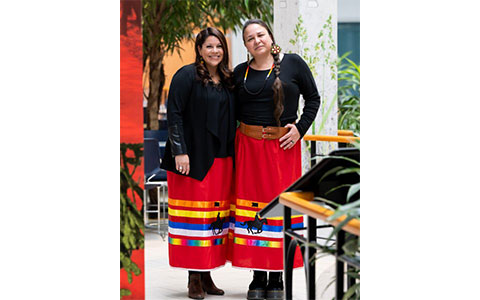
Karine Way is the Program Coordinator responsible for connecting the RCMP with Indigenous languages. She finds the inspiration from her grandmother’s journey to reclaiming her own language, and has fearlessly stewarded the Program from its conception. Way’s grandmother went to a Residential School where she was punished for speaking her traditional language. Over time, she lost her ability to speak it.
“Like many Survivors, she carried the impacts of that loss throughout her life,” says Way. Her grandmother also feared that when it came time to cross over to the spirit world, her ancestors may not understand her. This inspired her to do everything she could to restore her language.
This launched Way into action. In her leadership role, she feels fortunate to be able to contribute to the restoration of languages for RCMP employees across Canada. In her words, “Language is connection. It is connection to family, community, culture, ancestors, and identity. For me, supporting Indigenous language learning is about helping restore those connections.”
Way finds it especially empowering to mend the mistakes of the past. “Working for an institution that played a role in policies that contributed to language loss carries a responsibility. If organizations like ours had a hand in disrupting those connections, then we have a duty to be equally committed to helping restore and strengthen them.”
Continuing the legacy
Tracey Paul Kirkpatrick feels that the investment made by the RCMP in the Program is a true act of reconciliation. Inspired by the teachings and legacy of her father, Paul Kirkpatrick is learning the Wolastoqey language that she couldn’t learn in the Bilijk First Nation where she grew up. The abuse that her grandparents and father endured at Residential School and Indian Day school for speaking their language was severe. To protect future generations of their family from the same abuse, they chose not to teach the language. With the passing of time, little of the language was spoken and understood by her family. However, Paul Kirkpatrick remembers it was alive in her grandparents’ home as they always spoke it with one another. This small glimpse of the language inspired Paul Kirkpatrick’s journey of reclamation offered by the Program.
Paul Kirkpatrick has now completed two levels of Wolastoqey language training. She now proudly introduces herself in Wolastoqey when she is leading meetings and presentations. In her role as a Planning Advisor for the Indigenous Career Navigator Program, she advocates how the RCMP is an employer of choice.
“When we as Indigenous employees can demonstrate that we have support from our organization to do incredible things like the language revitalization, it’s amazing for us in our relationships with the communities we serve,” says Paul Kirkpatrick. “As Indigenous employees, we bring our authentic ways of being, knowing, and our world views to work and pair it with Federal policy. This “two-eyed seeing” ability helps us to positively bridge connections and partnerships with Indigenous communities.”
“By investing in language and creating opportunities to incorporate Indigenous languages in meaningful ways, the RCMP is helping to foster cultural understanding, strengthen connections, and support language revitalization.”
Path to empowerment
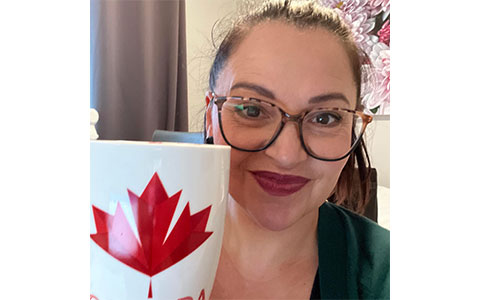
Cultural reclamation is fundamental for Jennifer McNeil, a retired Staff Sergeant in British Columbia, and her family. McNeil’s mother could not escape the harmful grasp of a Residential School growing up in Williams Lake First Nation. She was taken away from her home at just four years of age. She recalls her mother describing the assimilation process she’d endured there, which set her on a journey of trying to fit into mainstream society. The cost was her identity, culture, community and language.
At age 72, McNeil’s mom is now reclaiming what she lost, along with her daughter and her sister. Through the Program, the family is learning Secwepemctsin together, their traditional language. They speak it with each other and amongst other family who are also learning it.
McNeil’s family is striving to learn more. Currently, the Program is adding a second level of language that they can learn. As the family learns, they are regaining their connection to the culture and community, and a closer connection with each other.
McNeils’s mom now frequently goes home to Wiliams Lake First Nation for Powwows and ceremonies. McNeil admires her mother’s growth as she regains her feeling of belonging and being an elder in her community.
Teachings to reclamation
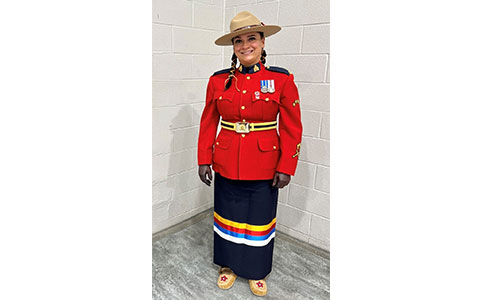
Building connections to community is most valuable to Constable Wanda McKenzie, and the work that she does as an RCMP officer in Saskatchewan. A Residential School Survivor, she is continuing to regain one of her traditional languages.
Growing up, she always spoke Cree at home and lived a traditional way of life in Northern Saskatchewan. In elementary school, she attempted to speak in Cree to her peers, in an English classroom. When other children laughed at her attempts, she felt discouraged, and vowed that she wasn’t going speak the language ever again. She was inspired by her mother’s Cree response: “If you do not learn to speak the language of your ancestors, it's going to die and we will lose it forever.” That advice has resonated with her throughout her life.
During this time, McKenzie also discovered that her father had spoken Denesuline fluently in his childhood. After the loss of family during his youth, he was moved far from home where he lost his Denesuline language. Knowing this, McKenzie enrolled in a Denesuline course coordinated by the Program. For her, she finds that language innately brings a connection to culture, community, and most importantly, a sense of respect and trust. McKenzie feels she is guided by her ancestors, and learning Indigenous languages is one way she honours them.
As a Police Officer, having only worked in Indigenous communities throughout her career, McKenzie feels that is where she is understood and welcomed. In her own way, she feels she is reconciling the RCMP with Indigenous communities. She encourages all RCMP employees to learn about languages, and the culture of the communities where they serve and live.
“In this career, it is important to educate ourselves, as communication is the key to building trust. Even if it is just a few phrases of language, it brings understanding and respect. This should be a continuous learning process within the RCMP, as we are serving the many Indigenous communities in this country.”
Honouring the community
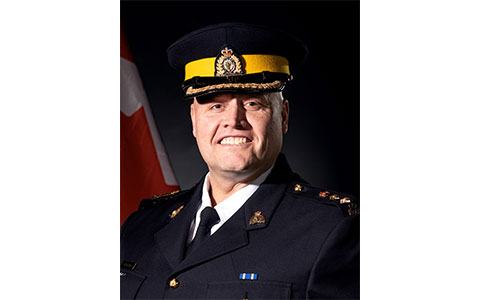
Chief Superintendent Kent Pike has spent most of his career in Northern Canada. Now the Commanding Officer of the RCMP Division in Nunavut, he has reflected on the importance of learning Inuktitut. When a reporter asked him if he would like to learn the language, he realized that this was something he was really interested in doing. The timing aligned with the call out to RCMP employees about the Program. In the past, he recalls using Translators to help with communications in communities he served in. To have a closer relationship with the community, he knew it would be an honour to learn the language.
Pike has just completed the second level of Inuktitut language training. He is realizing the benefits of learning the language in his professional capacity, as it brings mutual understanding between RCMP members and the community. “We are often dealing with people in crisis, but simply understanding that one word or saying one word to that person who is in crisis, it quickly de-escalates the situation. It shows you respect the person and in turn they respect you.”
He explains that when you are posted in a northern community, you are a part of it. A police officer will have relationships with community members in a personal and professional capacity. Pike encourages anyone in the organization to learn an Indigenous language.
He will continue his Inuktitut language learning path; in fact, the RCMP detachment and the Government of Nunavut are collaborating on a language education program that offers training to the community and RCMP members.
A commitment for future generations
The Indigenous Languages Program at the RCMP continues to grow and thrive. Encouraged by many employees returning to the Program for additional training, Way continues to work with training providers to add first, second and third level language learning curriculums in various Indigenous languages. She defines language learning as more than words and sentence structure: “Through language, learners gain insights into Indigenous worldviews, values, relationships, and ways of understanding the world. Ultimately, the work of the Indigenous Language Program is about the children, the grandchildren, and the generations yet to come.”
ƛ̓ekoo | Ekosani | Ǧiáxsix̌a | Gunałchéesh | Háw'aa| Hąį’ | Hei Hei | HÍSW̱ḴE | Huy'ch'qa | Kleco | Kukwstsétsemc | Kʷukʷscémxʷ | Limləmt | Màhsi’ choo | Marsi | Mēduh | Meegwetch | Merci | Miigwech | Mîkwec | Misiyh | Mutna | ᓇᑯᕐᒦᒃ (Nakurmiik) | Nakummek | Niá:wen | Quana | Qujannamiik | Quyanainni | Sechanalyagh | Shä̀w níthän | Sógá sénlá’| Thank you | Tiawenhk | T'ooyaḵsiy̓ n̓iin! | Tsin’įį choh | Tshinashkumitin | Wela’lin | Wliwni | Woliwon | Woliwun | Wopida | Wuujǫ aasanalááʔ