
News release
Saskatchewan RCMP Traffic Services reminds motorists of school zone safety and regulations
September 2, 2026
-
Regina, Saskatchewan
From: Saskatchewan RCMP
On this page
Content
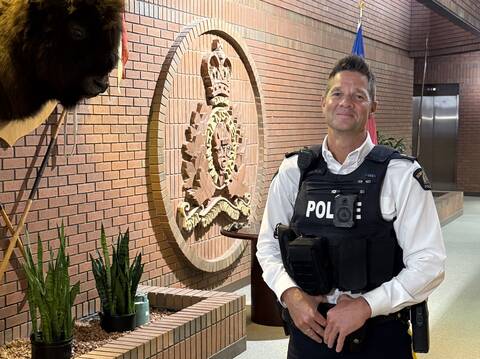
Today is back-to-school day for Saskatchewan students and Saskatchewan RCMP Traffic Services want to help drivers and parents brush up on the dos and don’ts of driving in school zones.
Inspector Lee Knelsen, Operations Officer of the Saskatchewan RCMP Traffic Services, says: “Everyone plays a role in keeping children safe in school zones. That’s why knowing what to do is so important. Saskatchewan RCMP officers will be present in school zones across Saskatchewan, reminding drivers to slow down, stay alert and help protect young pedestrians."
To help keep children safe, Inspector Knelsen encourages all drivers to adopt the following behaviours in school zones:
Reduce your speed.
Before entering a school zone, you must reduce your speed to the posted limit. The speed limit is in effect every day of the week, all year. Resume your previous speed only after having exited the school zone.
Stop for school buses.
When a school bus has its red lights flashing and stop arm extended, you must stop at least five metres away from the school bus. Wait for the red lights to stop flashing and the stop arm to be pulled in before moving again.
Obey school crossing guards.
When approaching a crosswalk, you must obey directions to stop given by a crossing guard. Watch for crossing guards when entering a school zone, as they may not always be stationed at designated crosswalks. They are easily identified by their high-visibility vests and stop paddles.
Locate pedestrians, children and cyclists around you.
When driving in a school zone, take the time to locate pedestrians, cyclists, and scooter riders around you. Children can be unpredictable while playing or walking to and from school and may enter the roadway unexpectedly. Stay alert, expect the unexpected, and give cyclists plenty of space. Before opening your vehicle door, always shoulder check for approaching cyclists and other road users.
Avoid U-turns and three-point turns.
When driving in a school zone, never make a U-turn or a three-point turn. These manoeuvres are illegal because they can be difficult for children to anticipate, increasing the risk of a collision. If you need to change direction, turn onto a different street at the next intersection instead.
Parents who drive their children to school have additional responsibilities in keeping children safe in school zones. Inspector Knelsen encourages parents to adopt the following behaviours in school zones:
Stop in designated areas.
When dropping off children at school, do not stop in designated school bus loading areas, which are typically marked with cones. These zones help students safely board and exit buses at the curb. Always use designated parent drop-off zones instead.
Do not stop or double-park in driving lanes, even if you plan to be there only temporarily.
If parent drop-off zones are full, do not stop or double-park in driving lanes. Doing so is illegal and blocks other drivers' view of pedestrians, increasing the risk of a collision.
Have children exit the vehicle on the side away from moving traffic.
When parent drop-off zones are full, stop where your children can safely exit your vehicle away from traffic, ideally from the passenger side on the same side of the street as the school. This reduces their exposure to passing vehicle.
Walk a block.
If you can, choose to park a little farther from the school and walk the rest of the way with your children. It helps reduce traffic congestion near the school and ensures children know how to safely walk to school.
Stop your engine in the winter.
When stopping near a school in winter, turn off your engine, even if you're only parked briefly. Exhaust fumes create a visual obstruction, making it more difficult for drivers to see children near your vehicle and for children to see approaching traffic.
Teach your children a few safety rules.
Refresh your children's knowledge of school traffic safety rules each year. Remind them to use sidewalks and crosswalks, look both ways before crossing, stay alert and avoid distractions, texting or listening to music. Walking the route to school together before the first day can help identify safe crossings and potential hazards.
Inspector Knelsen added: “There are many things we can do to help keep children safe on their way to and from school. But if I could ask drivers to do just one thing, it would be to slow down in school zones. Reduced speeds give you more time to react to the unexpected and can make all the difference when it comes to preventing a collision.”
For more back-to-school safety tips, go to: