
Amber's story: An RCMP officer's journey from chaos to purpose
Trigger warning: violence
By Robin Percival
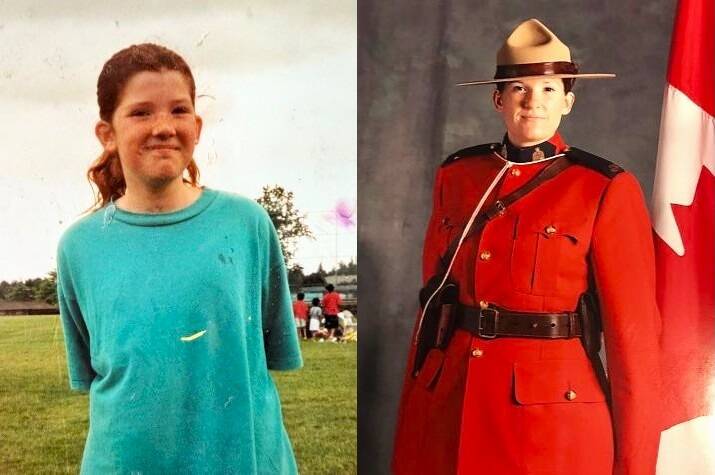
Constable Amber Rossi age 11, and at Depot graduation in 2017
Image by Constable Amber Rossi
November 23, 2026
Content
The final act of violence in her childhood occurred over a disagreement about a cup of cocoa.
Constable Amber Rossi says of her mother: “She threw me down a flight of stairs…she was bashing my head off the wall. Then she called Child Protective Services and said, “Take these kids or I'm going to (expletive) kill them.”
Rossi and her four siblings were taken into custody, never to return home again. She was 12-years old.
Hopeful beginnings
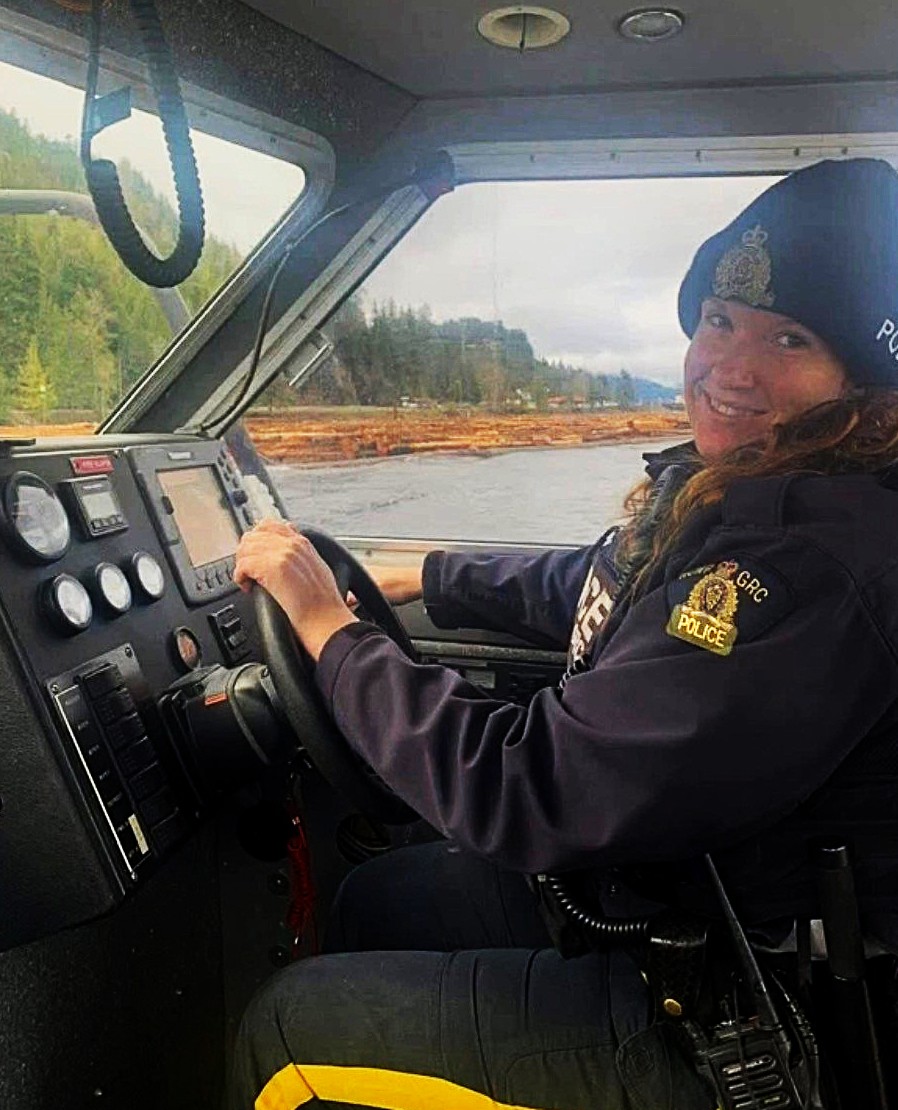
Credit: Constable Colin Banks
“I've just always, as long as I can remember, really really wanted to be a cop.”
Rossi's reasons for joining the RCMP were different than most. As a domestic abuse survivor, “I wanted a career where I could make sure this never happened to anyone else. We know that's not how that works, but you can definitely make a difference.”
For Rossi, arriving at the RCMP's training academy (Depot) in Regina was the realization of a life-long dream. At 30 years old, it had taken her some time to get the proper qualifications; but suddenly, her life had something it never had before: structure.
Midway through training, one of her troop mates accidently broke Rossi's arm. “I didn't say anything. Then, the bone was popping out, and someone noticed it - so they casted it up.” She attributes being able to train vigorously even with a serious injury to her childhood: “The more we cried, the more we got hit. I couldn't cry until I was about 20. And my pain tolerance is ridiculous.”
Still, Rossi says the six-month training was an experience she “loved, a hundred percent.”
Ten years later, all of Rossi's postings have been in British Columbia, where she's from. She currently works in Port Hardy, a small municipality on the northern tip of Vancouver Island. Besides general duty policing, she is part of the Tactical Troop, and recently had deployments for the G-7, and FIFA.
Rossi is very aware that her future could have been something completely different.
A childhood of horrors
It's only been a few years now that Rossi has been able to speak about any of it.
When she was two, she was taken from her parents after doctors spotted hand marks around her neck. Her parents hired a lawyer who argued that it was caused by tight clothing, and she was returned home.
It continued from there. “There was physical abuse, emotional abuse, broken bones, anything you can think of.” She went to school in baggy clothing to hide the wounds. “When they'd go after my younger siblings, I'd step in and scream at them. And then I took the brunt of it.”
Still, no one else knew. “We just learned how to lie. We didn't go to the doctor. Back then, it wasn't something that was talked about. We just thought this happens in every house. We didn't know any better.”
The group homes that followed weren't much better. “My stuff was getting stolen. I was getting beaten up. I was held down with a knife to my throat at one point.”
Someone in Rossi's position would be at a high risk for drug and alcohol use; but instead, she became addicted to adrenalin, “racing cars and doing stupid things.”
A new family
Rossi says her RCMP colleagues have been hugely supportive when things have gotten rough. When a foster child she'd grown attached to took his own life, “immediately I was reached out to, checked on - “what can we do to help you?””
And when her now-homeless father started texting her with chilling messages such as, “Hey cop, I see you're in Bella Coola. Can I play with your gun just once?” - they rallied around her to make sure she was safe.
“I feel like I've found a family in the RCMP.”
A place of peace
Rossi knows now that both her parents were battling major mental health issues.
She accepts that she may always struggle with the PTSD that came from her experiences; but she also thinks it's made her a better police officer. She can relate to many of the people she sees during a shift. She has compassion for them, and knows not to take their anger and abuse personally.
“They still deserve the same respect and the same approach you would give a doctor, a lawyer, someone in a better situation than them.”
“She is, without a doubt, one of the most caring people I have ever had the privilege of knowing,” says her friend and former colleague Constable Krista Gale. “As a police officer, she treats people with dignity, patience and understanding.”
Now 40, Rossi has found peace with her partner, two stepchildren, and a job that changed her life. She says she'd recommend policing as a career to anyone: “You end up finding something in yourself you didn't know you needed to find. You get to help someone get through the trauma. And in a way, it helps you recover from your past.”