
RCMP advances mental health since Parliament shooting
By Patricia Vasylchuk
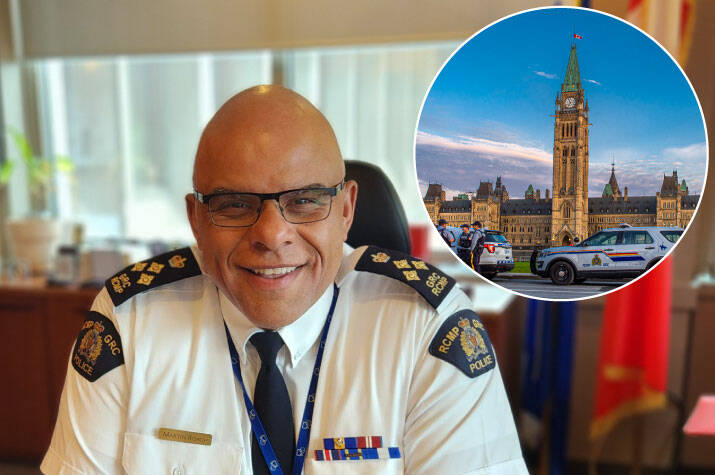
Assistant Commissioner Martin Roach in his office in Montreal (Quebec)
Image by Patricia Vasylchuk, RCMP
September 9, 2026
Content
Assistant Commissioner Martin Roach will never forget what he was doing when news of the attack on Parliament Hill in 2014 hit.
"There's only a few things in life that stick out in your memory like that, and this was one of them," says Roach, who is now Regional Commander Eastern Region. But, back in 2014 he was working in the RCMP's National Division criminal operations (CROPS) office in Ottawa.
"We were just coming back inside the building after a fire drill exercise when I heard about it over the police radio" recalls Roach. At the time, he was deployed by CROPS to the command centre. As more details of the incident emerged over the coming days and weeks, Roach learned that some of the officers involved were known to him.
"Learning I knew some of these officers, the mindset then was thinking through if they were OK and thinking through the magnitude of the events they had to deal with," he recalls. "Those officers were incredibly brave; they knew they could have lost their lives and they still went in."
Championing mental health
Today, Roach wears two hats: Regional Commander for Eastern Region Federal Policing and, since 2024, RCMP mental health champion. In the latter role, he's working to raise awareness of the mental-health programs and services available to RCMP officers and employees.
"The more we share about employees' experiences the better," says Roach about the organization's goal to "reduce the stigma of talking about mental health."
Just months before the attack in Ottawa in 2014, the organization was already taking steps to improve its mental-health services by launching its Mental Health Strategy. Since then, it's also made several new programs and services available to officers and civilian employees of the RCMP.
"We're in a different reality; we've evolved," says Roach. "Now, we're making significant advancement and that comes with commitment, employee engagement, and changing policy so that our decisions are always using the lens of mental health and employee safety."
Lessons learned
"The organization did the best it could with what it had at the time," says Roach. "There were a lot of lessons learned."
One lesson is that stress reaction isn't necessarily caused by the most obvious critical incident; it can build over time, because of other things that have affected a person beforehand, or events occurring afterward.
Even the traditional debriefings are changing following evidence-based recommendations issued by the World Health Organization and many professional organizations, according to Roach. While the organization maintains its mandate to deliver an occupational health assessment to officers within 72 hours of a critical incident, it has moved to general emotional support sessions educating participants on the various stress reactions.
"It's not about reliving the story in a group setting, it's about focusing on raising the awareness of the symptoms that they may incur in the days, months, or years to come, and how we can help people become more resilient," says Roach. "Individual approaches can also be done and much depends on the officer's preferences."
Teaching resiliency
Depot, the RCMP training academy, has added Emotional Resiliency Skills Training for every new cadet in recent years. The organization is working to expand the training to all RCMP in the near future.
"It will happen over time, and we're making great strides," says Roach.
The RCMP also offers other emotional support activities including peer support and access to mental-health professionals. These are offered in a group or individually depending on the scope of the event, and participation is voluntary.
Outside-the-box solutions
"We all go through a series of events in our careers, at all levels," says Roach about having to deal with difficult calls and experiences at work. "When I was a young officer I responded to a service call for a murder-suicide of a family," recalls Roach. "That one stayed with me. It was just a good family that ran out of solutions."
He says the mental-health support RCMP employees and officers have today is more robust.
"Having gone through a few critical incidents myself, I can see the improvement," he adds.
He says that he's found three things that have been key to managing a healthy state of mind after traumatic exposure: disconnecting from work with people outside of the organization, coaching football, and being able to talk about how he's truly feeling.
But he admits different things work for different people. That's why part of the new approach to mental health at the RCMP is finding many different solutions that are not one-size-fits-all.
"Looking at things outside the box is very effective," says Roach citing the success of The General, the organization's first facility dog devoted full time to comforting employees and officers. "There are other divisions already looking into getting one for themselves. I'm also looking to implement this program in my own area of command - we already have a handler and the dog and are finalizing the details!"
Roach says the organization also now recognizes that some officers might need time to focus on themselves after a critical incident.
"This is one of the reasons we are implementing a new protocol called the Operational Stand Down," says Roach, explaining that under the protocol, a supervisor may place an officer on a temporary break from operational duties for up to 14 calendar days so that they can focus on their physical and psychological well-being. "It's a proactive compassionate approach to supporting officers."
Program success
The RCMP's National Reintegration Program (NRP) has been very successful, according to Roach. The goal of the program is to help RCMP officers who've been involved in any form of traumatic or critical incident. It also supports those who are returning to work gradually following an absence greater than one year (or less if recommended by a member of the Occupational Health Team) for other reasons, such as from parental leave. The goal is to support them to safely return to work with confidence.
Launched as a pilot program in 2015 in Alberta, the RCMP expanded it to all Canadian provinces and territories between 2022 and 2024.
"Our focus for mental health is to build consistency across the board," says Roach.
The latest statistics conducted by the RCMP show that 88 per cent of participants return to operational duty.
Support in silence
One aspect the NRP is addressing is the secondary trauma that can happen to officers in the aftermath of a critical incident.
After an officer-involved shooting, typically, an outside agency or special investigations unit is brought in to investigate. To protect the integrity of that investigation, the RCMP is restricted in what it can say to both the public and its own employees. When that flow of information is restricted, the silence and any adverse public attention over and above the trauma of the shooting can be incredibly difficult on affected officers, says Roach.
"With the shooting on Parliament Hill we see how the officers said this impacted them," says Roach. "We know that following a critical or stressful incident people have a pressing need to know what happened, what's happening, and what's going to happen. If that information can be provided it will alleviate a lot of stress."
Relying on its many partnerships and positive working relationships with many provincial independent investigations offices, staff at NRP can now provide officers with information about the investigative and legal processes of the incident.
Moving forward
Today the organization is in the final stages of developing the RCMP's national reintegration policy. It aims to make it mandatory for all RCMP officers to go through the Reintegration Program following a critical incident or a graduated return-to-work following an absence longer than one year.
In addition to the other new programs and services now available to employees, the organization is now also working on a three-year Workplace Wellbeing Roadmap.
"A modern policing culture is essential," says Roach. "We want an RCMP where all employees feel respected, supported, and proud to serve. This work takes time, but the direction is clear, and we're making steady progress."
Please visit our website for more information on mental health, wellbeing, and support at the RCMP.