
Running toward gunfire at Parliament Hill, Part 4: Re-living a tragedy
Trigger warning: death, suicide, mental health
By Patricia Vasylchuk
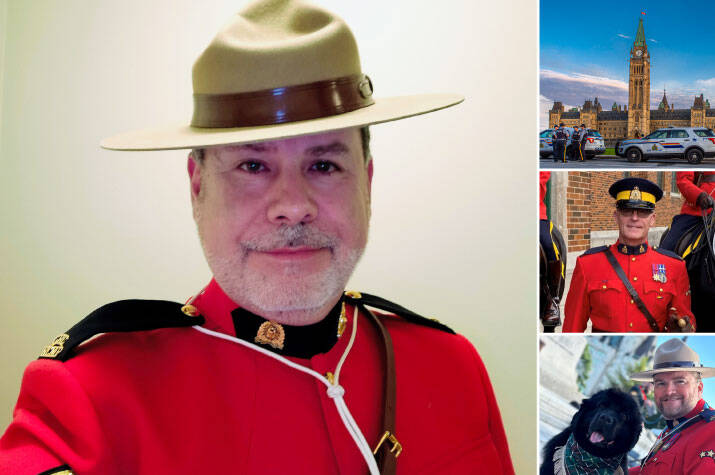
A recent picture of Corporal Dany Daigle.
Image by Corporal Dany Daigle
April 22, 2026
Content
While the morning of October 22, 2014, started out like any other, it wasn’t even 10 am when Corporal Dany Daigle, Sergeant Richard Rozon, Constable Curtis Barrett, and Constable Martin Fraser stood face to face with a terrorist unloading a .30-30 calibre hunting rifle in Parliament’s Hall of Honour. Read Daigle’s journey of the aftermath in part 4 of the Gazette’s series Running toward gunfire at Parliament Hill. If you missed Parts 1, 2 and 3, read them now.
Coming soon: Don’t miss the Gazette’s interview with the RCMP’s Mental Health Champion
Celebration to lockdown
Corporal Dany Daigle planned to celebrate his 24th year in the RCMP in style that evening. Instead, he faced a hailstorm of bullets and gun powder.
Misleadingly however, the morning started out like most others for Daigle, who oversaw operations on the outside of Parliament Hill, including the work of 12 RCMP officers. That fateful morning, he was at the vehicle screening facility with Barrett, where former prime minster Stephen Harper had just been waved through the gates. Then he heard a woman’s voice crackle over the radio.
“She said, ‘There’s a man with a gun, there’s a man with a gun! He’s taken a car and he’s going toward centre block,’” recalls Daigle. Giving quick orders for a complete lockdown of the exterior of the property, Daigle jumped in a car with Barrett and headed for the main entrance of the building.
“I saw all these people running from Parliament—it was a stampede! I saw people falling down and hoped he wasn’t shooting people,” says Daigle, who was still reeling from a recent assignment in Moncton, New Brunswick, where three RCMP officers lost their lives and two were injured by a mass shooter. Five months earlier, Daigle had arrived on scene in Moncton on June 4 to help with the investigation the day after the incident first unfolded. Officers were still searching for the shooter. He was responsible for securing the crime scene and questioning neighbours. Later, he was also on security detail for the funeral.
“There were so many bullet holes in the cars, it was like Swiss cheese; there was blood everywhere,” recalls Daigle when describing the scene in Moncton, visibly emotional. “So, in my mind, seeing what was happening on the Hill, I knew we were facing death and I was saying goodbye to my children and brothers and sisters in my head –I knew our equipment wouldn’t stop a rifle and I was an easy target, but I had to go.”
Despite facing certain death, he says the fear of his team members and other innocent people dying drove him “to go in no matter what, to stop [the shooter]”.
Facing a killer
Once inside, Daigle took up the back of the standard triangle formation –called Immediate Action Rapid Deployment or IARD—behind Rozon, Barrett, and Fraser.
“We heard people screaming and there was lots of commotion,” says Daigle. “House of Commons security, both uniformed and in plain clothes, were taking cover.”
Moving closer to the library, a gunshot rang out and Daigle saw Rozon get pushed back. He thought Rozon was hit, but still they kept moving forward. It was soon after this that Barrett yelled “Gun!” and Daigle says the shooting started. When he saw the shooter’s hand go up in the air holding something, he feared it was a detonator. Moments later, everything came to an end with Barrett making the fatal final shot.
“Fraser stayed with the body, and I could see the knife attached to his wrist by a rope,” recalls Daigle, visibly shaken. “If we had been close, he would have been stabbing people.”
Broken trust
When it was all over, the RCMP took Daigle and the other three officers into separate rooms where they were questioned. He says it was a result of the false narrative circulating that former Sergeant-at-Arms, Kevin Vickers, was the lone hero that saved the day.
“They took my belt and gun and read me my rights,” says Daigle still shocked. “I felt like I wasn’t a police officer anymore, like I was under arrest. I couldn’t believe it! We know what we did –that we stopped the threat –but we were treated like we were criminals.”
Daigle says their decision to even enter the building was questioned under the rationale that their posts were outside. But Daigle says their actions are completely justified. First, they were aware that the House of Commons security didn’t carry firearms and didn’t have police backgrounds with training for such situations.
“Because they didn’t have equipment or training, we had to intervene,” explained Daigle.
Secondly, arriving on scene he says they were aware that the situation was ongoing, unfolding in real time, and they didn’t know how many shooters were inside. When they entered the building, he says all the security personnel were taking cover and people were motioning to them to head toward the library.
“I didn’t see anyone in IARD formation, so we advanced slowly down the hall,” says Daigle.
Darkness and silence
After the questioning, Daigle was driven home and told to stay there not talk to anyone, that someone would reach out to him.
“They didn’t want us to talk to each other because the OPP was investigating and they didn’t want us to mix up the information,” recounts Daigle. “And I agree with that, but I wasn’t allowed to talk to anyone, not just the other guys, or go back to the office.”
He says that over the course of the next week someone from the RCMP called him twice to ask if he was OK but didn’t give him any more information.
After a week the OPP finally reached out to Daigle for an interview, while it was crickets from his own workplace. So much so that Daigle had to reach out himself to ask when he could return to work.
“I got more sympathy from the OPP investigator who thanked me and shook my hand, than I did from the RCMP,” he says. “There was all this [untrue] stuff on the news and the RCMP never challenged or corrected it.
He says that the RCMP was getting information from House of Commons security but never checked in with Daigle, Rozon, Barret, nor Fraser to determine if it was true.
“At one point in Moncton I was just walking down the street in my uniform, and some people stopped me and thanked me and were cheering for us,” recalls Daigle. “But here, I was treated so badly.”
About a week after, Daigle recalls being in the RCMP group debriefing held that was attended by other officers and their spouses –most of whom weren’t involved in the shooting—the same debrief that caused Barrett to be physically sick.
“It was really strange,” says Daigle who was used to small debriefs where only the people directly affected by the incident were present. “This has never happened during any other incident.”
It made Daigle so uncomfortable, he stayed silent. At home there was also no one to talk to as he lived alone at the time.
“Being in the dark, not being able to talk...all the silence was dreadful to me,” says Daigle. “When I finally got back [to work] it felt overwhelming.”
Declining mental health
Daigle returned to work on the Hill just two weeks after the shooting. He says that if someone had asked him if he wanted to work elsewhere, he would have said ‘Yes.’ No one asked. As the stress rose for the next four months, he could only sleep one hour at a time.
“There was a lot of work, it was busy, and it was a difficult time because of what happened there,” says Daigle.
By February 2015, four months after the shooting, new security procedures and training were taking place on the Hill. Daigle was responsible for preparing the other officers for new static positions on the Hill.
“We received new bulletproof vests – at the time of the shooting there had only been one or two per team,” he recalls, adding that after the Moncton mass shooting he remembers discussions about having every frontline RCMP officer wear a vest, however, when he inquired, he was told there were delays.
After two months on antidepressants, which were prescribed to Daigle by his family doctor, the police officer wasn’t feeling better. In fact, the trauma was taking its toll, and he was no longer sleeping. It was then he decided to take extended sick leave and, on advice from his family doctor, to meet with a psychologist.
Seeing limited support from the RCMP at the time, Daigle reached out to multiple doctors on his own and finally got an appointment on his fourth try. It took two weeks.
Shortly after, the psychologist diagnosed Daigle with PTSD and PTSD-induced sleep apnea.
Finally, some relief
“I was there every week working on making me better,” Daigle says.
As part of his recovery, he visited the Hill for desensitization training.
“It was really strange going down the hall – I could see bullet holes everywhere,” he recalls. “The events on the Hill made me re-live everything that I experienced in Moncton, and I realized I should have gotten help as soon as I came back.”
When asked why he didn’t, Daigle chokes back tears: “I’m a police officer; I should have been strong.”
He says he realizes now that stigma needs to change, and he believes the RCMP should make it mandatory for all their officers to see a psychologist after a traumatic event.
“You never know what’s in their past that has accumulated over time,” says Daigle. “And one event could trigger something.”
Daigle returned to work full time in the fall of 2015, a year after the shooting, accepting a new position with the National Division training section. For many years Daigle continued to see a psychologist regularly. Now, he feels well enough that he only needs annual visits.
"It’s a long process; I still get emotional,” Daigle says of his ongoing recovery. “Every time I see a police officer on the news get hurt, I re-live it.”
Joy simplified
He says he owes part of his ongoing recovery to the brotherhood that stood next to him in the line of fire.
“We all kept in touch,” he says smiling. “And being able to share with Rick, Curtis, and Martin helped me a lot."
Daigle retired in 2021 after 30 years of service with the RCMP. He was planning to celebrate in style that evening. Instead, he got a certificate in the mail and an empty apartment.
“Retiring during the pandemic was really isolating; there was no party or anything,” says Daigle, acknowledging that he’s proud of his work and accomplishments with the RCMP. “When it was over, it didn’t even feel like I worked for the RCMP.”
Despite the disappointments and challenges he’s experienced, Daigle has come a long way. And he says remembering what’s most important in life brings him joy. Especially being a grandfather of 10.