
RCMP G Division Criminal Operations Annual Report 2025
Publication information
RCMP G Division Criminal Operations Annual Report 2025
© His Majesty the King in Right of Canada, as represented by the Royal Canadian Mounted Police, 2026
List of acronyms and abbreviations
- ASD
- Approved Screening Device
- BWC
- Body worn cameras
- CDSA
- Controlled Drugs and Substances Act
- CIPS
- Community and Indigenous Policing Services
- CSEM
- child sexual exploitation material
- DCAS
- Division Criminal Analysis Section
- DEOC
- Divisional Emergency Operations Centre
- ERT
- Emergency Response Team
- FIS
- Forensic Identification Services
- FNIPP
- First Nations and Inuit Policing Program
- GIS
- General Investigation Section
- GSB
- Gold–Silver–Bronze
- HCU
- Historical Case Unit
- ICE
- Internet Child Exploitation Unit
- IPV
- intimate partner violence
- MAS
- Mandatory Alcohol Screening
- MCU
- Major Crime Unit
- NCECC
- National Child Exploitation Crime Centre
- NSOR
- National Sex Offender Registry Unit
- NTHSSA
- Northwest Territories Health and Social Services Authority
- OCC
- Operational Communication Centre
- PDS
- Police Dog Services
- RCMP
- Royal Canadian Mounted Police
- RSO
- Registered Sexual Offenders
- SRU
- Specialized Response Unit
- TAV
- Tactical Armoured Vehicle
- TCRU
- Territorial Crime Reduction Unit
List of tables
Message from the Criminal Operations Officer
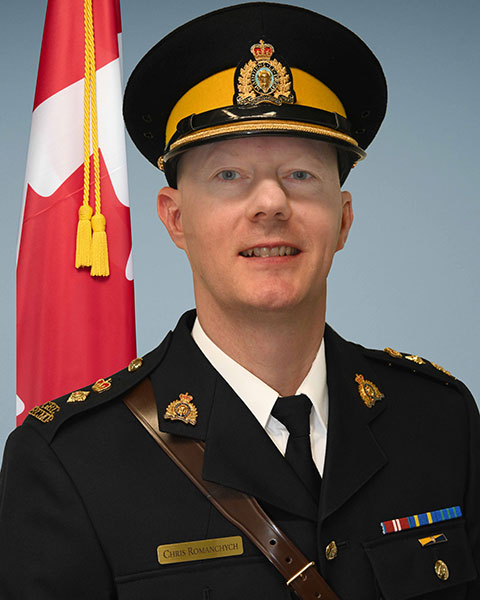
Criminal Operations Officer
As the Officer in Charge of Criminal Operations for RCMP G Division, I am pleased to present the 2025 Criminal Operations Annual Report. This report provides an overview of policing activity across the Northwest Territories, including operational outcomes, emerging crime trends, modernization initiatives, and the ongoing work of our members in service to communities across a vast and complex policing environment.
In 2025, overall occurrences across G Division decreased slightly by 2%, remaining generally consistent with recent years. While some areas showed positive movement, including decreases in firearm-related occurrences and modest reductions in CDSA files, the operating environment continues to evolve. Cocaine remains the most frequently trafficked commodity in the Northwest Territories, and organized crime, drug trafficking, firearms, intimate partner violence, and community safety concerns continue to require focused, intelligence-led responses. These findings reinforce the importance of targeted enforcement, intelligence-led policing, and strong collaboration with partner agencies.
Despite these complexities, the RCMP continues to demonstrate its commitment to public safety through proactive policing, community engagement, and specialized enforcement initiatives. Across all districts, the work reflected in this report demonstrates the professionalism, adaptability, and commitment of G Division employees to address crime, support victims, and build safer communities. This report not only captures the public safety-based operations but also reflects the dedication of our personnel and our ongoing focus on adapting to changing crime trends while maintaining the trust and confidence of the public we serve.
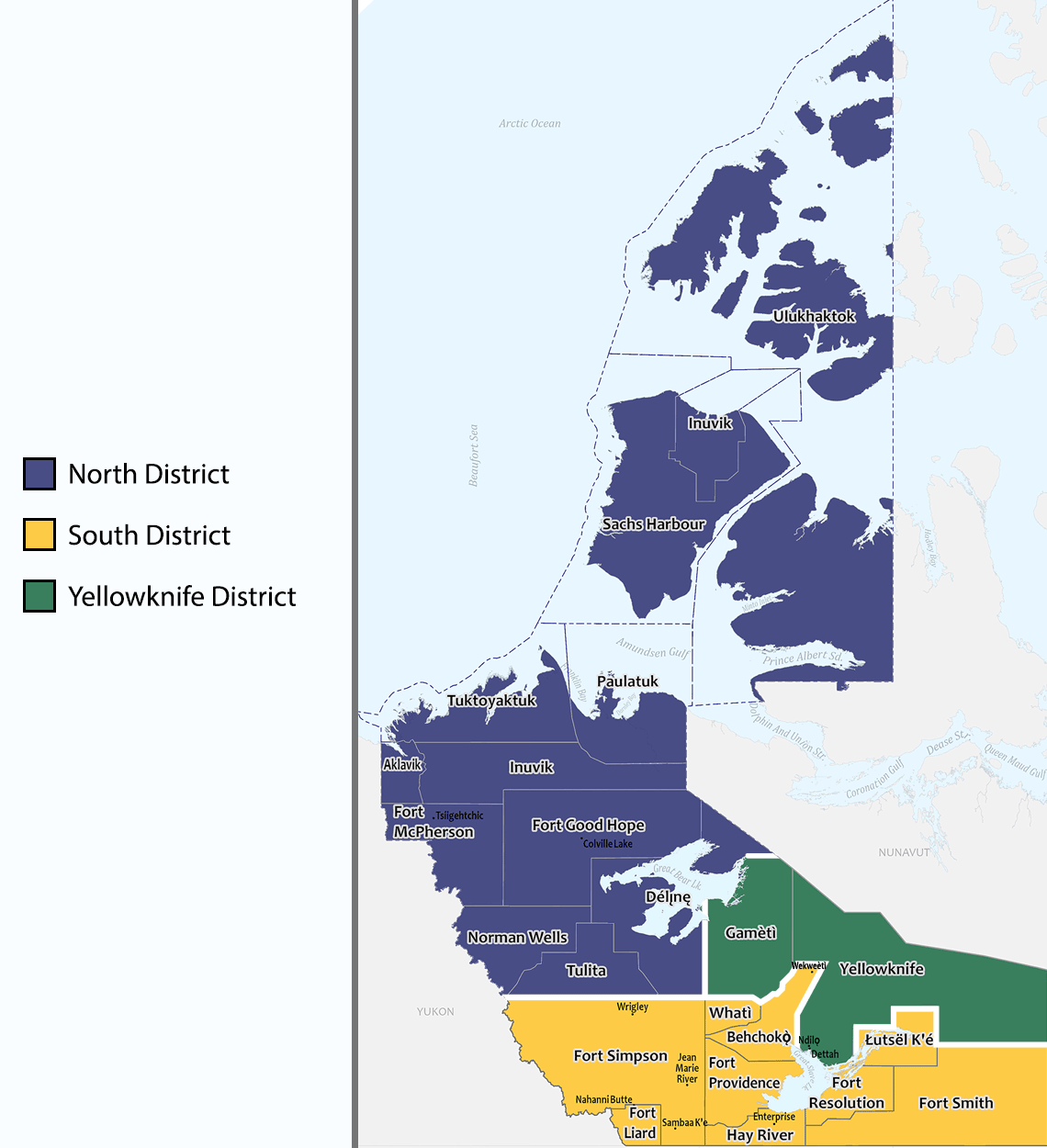
G Division districts map
G Division districts map
G Division overview
G Division is the Royal Canadian Mounted Police’s territorial division responsible for policing across the Northwest Territories. The RCMP operates over an immense geographic area of roughly 1.14 million square kilometres across diverse landscapes including tundra, boreal forest, mountains, and extensive river and lake systems. With an estimated population of 45,000, the RCMP deliver frontline law enforcement, community policing, and specialized investigative services across urban, rural, and remote communities.
The G Division RCMP is separated into districts, namely: South District, Yellowknife District, and North District. The Divisional Headquarters is co-located in the same building as Yellowknife Detachment. In total, the RCMP has 21 detachments and two satellite detachments spread across the 33 communities it serves, 11 of which are fly-in, remote communities. Additionally, there are four communities on the Arctic coast: Ulukhaktok, Sachs Harbour, Tuktoyaktuk and Paulatuk.
Further to the three districts, the G Division RCMP has additional specialized team and investigative capacity in Support Services. Examples of teams in Support Services are the Major Crime Unit, Territorial Crime Reduction Unit, Emergency Response Team, and Traffic Services. All these teams are strengthened 24/7, 365 days a year by the G Division Operational Communications Centre (OCC) team, who provide critical operational communication and support throughout the Division.
There are a total of 207 contract regular member positions and 22 First Nations Inuit Policing Program positions in the Division. Geography, climate, and distance significantly influence infrastructure, governance, and service delivery, making the NWT a unique policing and operational environment.
2025 Notables
Tactical armoured vehicle
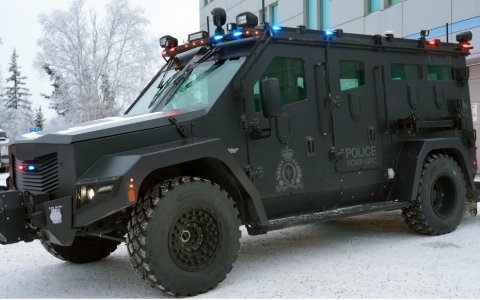
The G Division RCMP received its first ever Tactical Armoured Vehicle (TAV) in 2025. The TAV is a Canadian-manufactured armoured tactical support vehicle designed to provide ballistic protection for police officers and civilians during high-risk critical incidents. The vehicle enhances operational safety by allowing responders to safely access locations that may otherwise be denied due to threats involving firearms or other lethal risks. The TAV supports a wide range of Emergency Response Team operations, including high-risk arrests, high-risk search warrants, armed and barricaded incidents, hostage rescue, active threat responses, casualty extraction, and negotiation efforts. As a mobile platform for de-escalation and protection, it enables police to approach incidents more safely while improving public safety and operational effectiveness.
Body worn cameras (BWC)
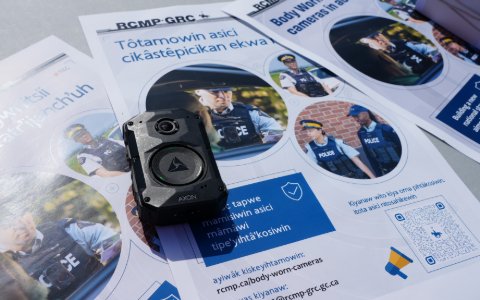
In order to strengthen transparency, accountability and public trust, the body-worn camera program was instituted nationally across the RCMP. The G Division BWC roll-out to front line members was completed in early August 2025, ahead of national goals. 182 front line members are active members in the Axon system. As of December 31st, the BWC unit held 102,555 pieces of digital evidence. The BWC team continues to be progressive, advocating for infrastructure upgrades (new satellite and fibre connections) which improved network efficiency, conducting stakeholder engagement and public awareness activities, and created public engagement materials which were disseminated in all 11 of NWT’s official languages.
The deployment of BWCs brought upon new tools and technological enhancements including a community request function that can be shared with the public to upload their own video / digital evidence. These ad hoc portals are used for high-profile incidents (for example, the airport shooting in Inuvik) and are a cloud-based BWC system that can accept all digital evidence and store digital disclosure materials. This is a highly efficient and effective method of seeking collection of digital evidence from the public.
Digital forensic services
In 2025, a civilian member certified as a Forensic Video Technician, thus enhancing the investigative capacity directly within the NWT. The Forensic Video Technician performs digital media processing and enhancement (video, audio, images), verifies the integrity of digital media evidence, conducts forensic extractions of media and security system records, produces reports, timelines, consult with investigators, and may provide expert testimony on digital media evidence.
The Forensic Video Technician became operational in October 2025 and has consulted on 11 investigations, provided enhancement and media processing on nine investigations, and produced reports for five investigative files. As digital platforms and evidence become increasingly common, this additional investigative capacity provides essential support to front line operations and complex investigations.
First Nation and Inuit Policing Program
The First Nations and Inuit Policing Program (FNIPP) is a critical policing model that supports the delivery of dedicated, culturally responsive police services to Indigenous communities across the Northwest Territories. FNIPP members focus on building trust-based relationships with Indigenous leadership, Elders, youth, and community organizations while addressing public safety concerns through prevention, engagement, and collaborative problem-solving. The program strengthens community safety and well-being by ensuring policing services are responsive, culturally informed, and aligned with the RCMP’s commitment to reconciliation and community-led policing.
The G Division RCMP have 22 FNIPP positions distributed across 13 detachments in the NWT. Concurrently, all members across the Division support the FNIPP function by engaging in community events, cultural awareness activities, and increasing awareness of policing activities. Collectively across the Division, in addition to the 22 FNIPP positions, all detachments have completed over 4,100 engagements with our Indigenous communities in 2025.
Mandatory alcohol screening
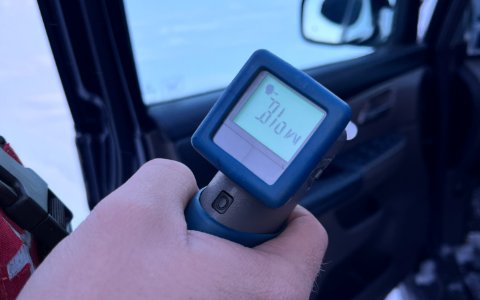
Since December 2018, Mandatory Alcohol Screening (MAS) is a lawful roadside enforcement tool authorized under subsection 320.27(2) of the Criminal Code that allows police officers to require a driver to immediately provide a breath sample into an Approved Screening Device (ASD) without the need for prior suspicion of alcohol consumption. In 2025, G Division implemented MAS to be used as widely and broadly as possible at traffic and check stops to maximize the detection and deterrence of impaired driving while maintaining an equitable and bias-free policing approach. When stopped by police in the Northwest Territories, all drivers should expect to provide a sample of their breath at the roadside, inherently creating a proactive approach rather than a reactive one. The G Division RCMP remain supportive of changing antiquated behaviours relative to drinking and driving and thank all drivers who continue to drive sober.
Gold–Silver–Bronze command structure
In order to enhance operations, the Gold–Silver–Bronze (GSB) command structure was introduced into G Division in 2025. The GSB command structure is a scalable command-and-control model used to provide clear accountability, decision-making, and reporting lines during major incidents and operations. In this framework, the Gold Commander provides strategic leadership by setting the overall objectives, priorities, and desired outcomes for the operation; the Silver Commander translates that strategy into an operational plan, coordinates resources, and directs the overall tactical response; and the Bronze Commanders are responsible for implementing specific tactical tasks within their designated geographic or functional areas. The GSB model is based on clearly defined roles rather than rank, ensuring effective coordination, communication, and operational flexibility during complex or rapidly evolving events.
GSB was successfully implemented during the 2025 wildland fire season, clearly defining an internal incident command framework and role definitions to maximize efficiency in communication and policing operations to support evacuated communities. Additionally, the role of the Divisional Emergency Operations Centre (DEOC) was re-aligned from incident command to providing coordinated support to front line operations, allowing “in theatre” resources to focus on their core service delivery of public safety.
Strategic communications
The Strategic Communications Unit played a key role in advancing public awareness through targeted messaging across multiple platforms. Monthly social media content highlighted policing services, specialized units, and community safety initiatives. Several posts and videos generated strong engagement, indicating increased public interest and understanding.
In 2025, the Strategic Communications Unit published 313 posts on the NT RCMP official Facebook accounts, which generated over 57,000 likes and 25,900 shares. In December 2025, the NT RCMP English Facebook page had 13,544 followers.
The social media engagement remains strong with operational posts, especially drug and alcohol seizures’ investigations. For example, a post about the largest seizure of cocaine in Northwest Territories’ history by the Behchokǫ̀ RCMP generated over 335,000 views. Another post on a Tuktoyaktuk alcohol seizure in November 2025 generated close to one million views and 300 comments.
Also in 2025, the Strategic Communications Unit released 170 press releases highlighting calls for service and policing trends.
Key statistical findings – All districts
- In 2025, there was a minor decrease (2%) in the number of occurrences. 2025 occurrences were 0.4% lower than previous four-year average (2021-2024).
- There has been a steady increase in CDSA occurrences in G Division in the last five years. 2024 had the highest number of CDSA occurrences. CDSA occurrences declined by 3% and charge decreased by 12% in 2025. Cocaine is the most trafficked commodity in G Division.
- In 2025, firearm-related occurrences decreased 25% compared to 2024.
- Firearms Act offences increased 20% (+8) in 2025.
- There were no significant changes in occurrence volume in most categories (for example, crimes against persons, CDSA), except for an increase in federal statute violations.
| 2025 | 2024 | Change | |
|---|---|---|---|
| Occurances | 43,957 | 44,696 | -2% |
| Charges | 6,476 | 6,765 | -4% |
In 2025, there was a minor decrease (2%) in the number of occurrences. Occurrence volume variability between 2021 and 2025 have remained generally stable with a percentage change varying between +3.6% to -1.65%. The average number of occurrences in the last four years (2021-2024) were 44,154 per year. 2025 occurrences were 0.4% of the lower than previous four-year average.
There were no significant changes in occurrence categories (for example, crimes against persons, CDSA) except for Federal Statute Violations (+49%), however the low sample size negatively affected the statistical validity of the increased percentage change. A slight decrease was observed in Controlled Drugs and Substances Act (CDSA) (-3%), crimes against property (-6%), and other criminal code violations (-10%) occurrences. Crimes against persons has remained relatively stable over the last five years. In 2025 crimes against persons were 3% lower than the previous four-year average.
In 2024 and 2025, crimes against persons consistently represented approximately 13% of all occurrences throughout the division and in each District. Similarly, the proportion of property crime occurrences also remained relatively stable across years and Districts, representing approximately 30% of all occurrences. Yellowknife district had a slightly higher proportion of property crime compared to other Districts. Between 2024 and 2025, the proportion of CDSA occurrences throughout the Division remained stable at approximately 2.5% but varied between districts. CDSA occurrences in South District represented on average 3.8% of all occurrences, compared to 1.35% in Yellowknife District and 2.25% in North District.
Crimes Against Persons – Charges
Division wide charges for crimes against persons have remained stable from 2024 (1790 charges) to 2025 (1787 charges). In 2025 there was an increase of 77 assault charges laid representing a 12% increase from 2024. Aggravated assault charges decreased by 23%. Forcible confinement charges declined by 20%. Sexual interference charges declined by more than half (-54%) with 14 less charges than in 2024. There was also a significant increase in pointing a firearm charges (+64) representing a 29% increase.
Traffic Violations
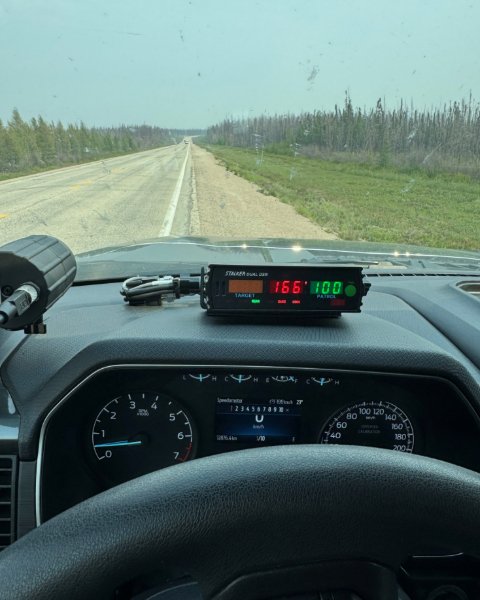
There was a 2% increase in traffic violation occurrences throughout the division in 2025. Traffic occurrences in 2025 were nearly 3% higher than the previous four-year average. Although traffic occurrences were higher in 2025, operation while impaired (alcohol) occurrences decreased in 2024 and 2025, compared to previous years (2021-2023). It was at its lowest in 2025, in which there was a 24% decrease in operation while impaired (alcohol) occurrences compared to the previous four-year average, and a 12% decrease from 2024. Traffic violation charges also decreased by 11%. There was a 13% decrease in operation while impaired (alcohol)/over 80mg% of motor vehicle, and an 11% decrease in speeding violation charges.
Controlled Drugs and Substances Act (CDSA)
CDSA occurrences declined by 3% in 2025. Trafficking cocaine was the most frequent CDSA occurrence type in 2025 and increased by 8% from 2024. The second most frequent occurrence was possession for the purpose of trafficking cocaine and declined by 20%. Occurrence data alone provides minimal insight into possible variables affecting the variance between 2024 and 2025. Charge data indicates there was a 12% decrease in CDSA charges throughout the division in 2025. Possession for the purpose of trafficking was the most frequent CDSA charge in 2024 and 2025 and saw an 18% decrease in 2025. However, trafficking cocaine charges increased from 11 to 15 charges (+36%).
There has been a steady increase in CDSA occurrences in G Division in the last five years. 2024 had the highest number of CDSA occurrences, 3.9 times the occurrences of 2021. Between 2021 and 2024, CDSA occurrence rates increased steadily from their respective previous years by 46% in 2022, 70% in 2023, and 57% in 2024. See Figure 1 for a chart of CDSA occurrences in the last five years. Cocaine is the most frequently trafficked commodity in the Northwest Territories.
CDSA occurrences from 2021 to 2025
Possession of fentanyl for the purpose of trafficking and trafficking fentanyl occurrences remained low in 2024 and 2025 with less 5 occurrences per year. In 2025 there were 8 charges laid for possession for the purpose of trafficking – schedule I: Fentanyl, and no charges for trafficking fentanyl.
Firearms in G Division
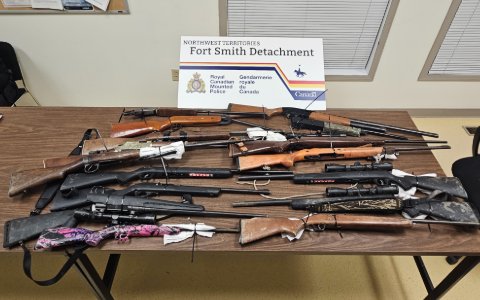
In 2025, there were 114 firearm-related occurrences in which the firearms were classified as evidence, offence-related property, prohibited, seized, stolen, used in, and used as a weapon. Firearm-related occurrences were down 25% compared to 2024. Firearm-related occurrences are defined as occurrences in which a firearm or firearm parts were involved or linked to the investigative file. In 2025, 272 firearms (incl. firearm parts and/or imitation firearms) were linked to investigative files. footnote 1 In 2024, 352 firearms were linked to investigative files. The most common firearm types in 2025 were rifles (141), shotguns (86), and restricted firearms footnote 2 (18). South District had the most firearm occurrences (48 occurrences, 115 firearms), followed by North District (43 occurrences, 11 firearms), and Yellowknife (23 occurrences with 40 firearms). There was a significant division-wide increase in pointing a firearm charges (+64) representing a 29% increase.
North District
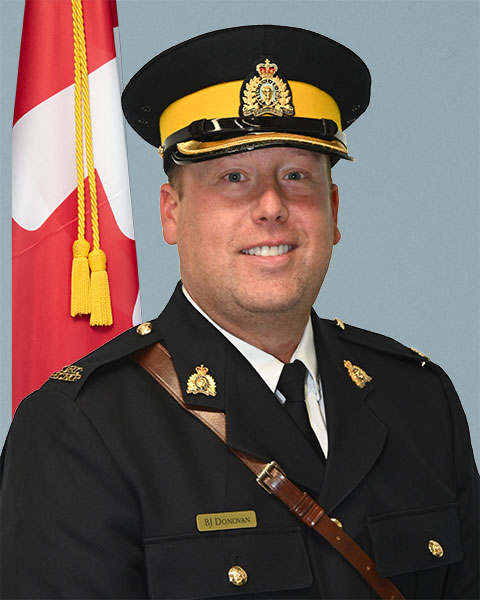
Officer in Charge, North District
RCMP G Division’s North District serves the communities of the Beaufort Delta and Sahtu regions, providing policing services across some of the most remote and geographically challenging areas of the Northwest Territories. Throughought 2025, the North District focused on crime reduction, public safety, and proactive community policing.
North District members responded to several significant incidents during the year, demonstrating the professionalism and effectiveness of both local detachments and specialized support units. Notable investigations included the Inuvik Airport shooting, which resulted in multiple attempted murder charges, and a homicide investigation linked to intimate partner violence. These were complex incidents required a coordinated along with other specialized resources to ensure public safety and successful investigations.
Equally important to enforcement efforts is North District’s commitment to community engagement. Members work closely with residents, Elders, youth, schools, and local organizations to build trust and strengthen community relationships. Through initiatives ranging from safety presentations and youth programs to cultural activities, sporting events, wellness programs, and support for vulnerable families, North District Members continue to foster meaningful connections and contribute to safer, healthier communities throughout the North.
Occurrences
| 2025 | 2024 | Change | |
|---|---|---|---|
| Occurances | 12,343 | 13,015 | -5% |
| Charges | 1,292 | 1,694 | -24% |
Occurrences in North District decreased by 5% in 2025. North District occurrence volumes have remained relatively stable in the last 4 years, averaging around 12,400, on par with 2025 occurrences. Property crime (30%) and crimes against persons (13%) are the two most prevalent occurrence types in North District.
Notable investigations / events
Inuvik Airport Shooting
On September 20, 2025, Inuvik RCMP were dispatched to report of shots fired at the local airport. Witnesses provided pictures and described how a male suspect shot the victim with a shotgun in the parking lot. The man then fled the scene in a pickup truck. EMS attended and transported the victim to the Inuvik hospital, who was stabilized before being medevac’d to Yellowknife. Measures were taken to contain the threat, including issuing a Police Initiated Public Alert warning the public to shelter in place and closing the Dempster Highway south of Inuvik at the MacKenzie Ferry. G Division Forensic Identification Services members attended the scene and collected evidence, including blood swabs.
After the suspect fled the airport, he struck six pedestrians outside of Inuvik. One victim was performing repairs on his vehicle roadside. Five additional victims were in a quarry when the male drove into them.
The RCMP G Division Major Crime Unit, Emergency Response Team, Police Dog Services, Crisis Negotiator Team, Forensic Identification Services, and Critical Incident Commander were all consulted and were en route to Inuvik when the male was taken into custody by Inuvik General Duty members without issue. Support was provided by Fort McPherson and Tuktoyaktuk Detachments. An AXON community request was also utilized to collect evidence obtained by the public.
The suspect, Maverick Elias, remains in custody facing several charges, including three counts of attempted murder.
Homicide
On October 30, 2025, Inuvik RCMP were dispatched to attend the NAPA auto parts store where a man had called the police to report he had just killed a female victim. Inuvik RCMP members attended, took the man into custody and secured the area for the Divisional Forensic Identification Services to process the crime scene. The Major Crime Unit members attended to assist with the investigation and interviews where it is believed that the murder was the result of intimate partner violence (IPV). The male, Kenneth Kyle, was remanded and remains in custody pending trial. North District conducted 293 IPV investigations during 2025, resulting in various charges before the courts, and engagement sessions with community partners in addressing the causal effects in the hopes to reducing domestic violence throughout the North.
Community Engagement
North District members daily support community events and promote positive interactions with the public throughout the Sahtu and Beaufort Delta regions. Activities include meetings with Elders, and with youth in various school and sport events. School visits, movie nights, and field trips to the local detachment, were among activities scheduled in 2025. The North District employees also engaged in series of presentations on topics like violence prevention, drug awareness with individual safety planning, public safety messaging on firearms, and safe operation of boats, snowmobiles and ATVs with the proper safety equipment.
Proactive social events include creative workshops, establishing local activities such as a Lego Club in Norman Wells, Elders craft night, coaching softball, hockey and basketball. Food and community gatherings are the way of the North, and the members host breakfasts, attended Elder’s dinners and delivered Christmas food hampers all in support of their communities. Partnerships in which the RCMP support young growing families and those in need are intrinsic to the engagement happening throughout the North, an example being the delivery of diapers, baby wipes and sweaters in Fort McPherson. Breakfast programs in Tulita, Morning Circle in Ulukhaktok, pancake breakfast in Inuvik, coffee time with health staff in Sachs Harbour are examples of the positive and ongoing community activities that continue daily though out the North.
South District
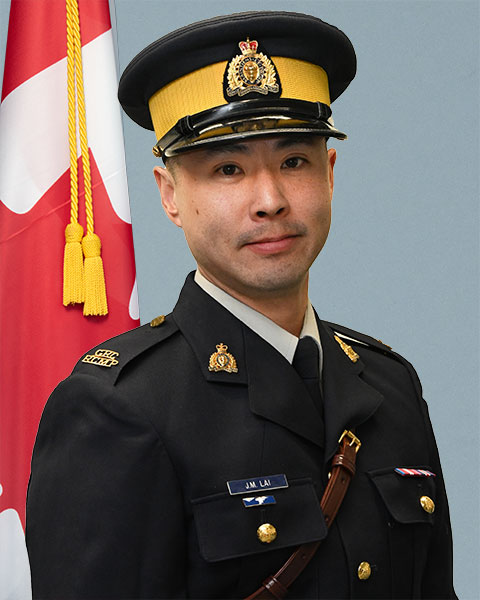
Officer in Charge, South District
The South District achieved significant progress in 2025 across its nine communities, driven by strong engagement with local leaders and residents. Through ongoing meetings, a clear priority emerged: addressing the illicit drug trade both within communities and along key highway entry points into the Northwest Territories. In response, the district strengthened internal partnerships—particularly with the Territorial Crime Reduction Unit—leading to more coordinated enforcement efforts and measurable results. Continued dedication from employees and strong community relationships also enhanced information sharing and intelligence gathering, contributing directly to operational successes.
Major investigations throughout the year highlighted the district’s enforcement efforts. In Hay River, multiple drug investigations disrupted local trafficking networks and resulted in the seizure of substantial quantities of drugs and firearms, along with the arrest of one of Canada’s most wanted individuals. Other notable actions included the arrest of an Alberta youth in Whatì found with drugs and a handgun, and an enforcement initiative in Fort Resolution that led to additional arrests and the seizure of a firearm and suspected drug-related cash. These efforts reflect a targeted and proactive approach to addressing crime across communities.
Occurrences
| 2025 | 2024 | Change | |
|---|---|---|---|
| Occurances | 17,735 | 17,167 | +3% |
| Charges | 2,973 | 3,296 | -10% |
South District occurrences increased by 3% from 2024 to 2025, meanwhile charges decreased by 10%. South District is the only district in which occurrences increased.
Wellbeing check occurrences have increased by 43%. From 2024 to 2025, there was no significant variation (less than 2%) in crimes against persons, CDSA, and crimes against property. There were moderate increases in traffic violations, non-criminal code violations, and provincial/territorial offences. The increase in traffic occurrences is mostly attributable to the Selective Traffic Enforcement Program (STEP). Despite the increase in traffic occurrences, speeding (-19%) and operation while impaired (alcohol)/over 80 mg% of motor vehicle (-12%) occurrences both declined. Traffic violation charges also decreased by 18%.
Firearms Act occurrences doubled from 2024 to 2025. Firearms related charges in general decreased in 2025, except for pointing a firearm (+80%), careless use of a firearm (+11%) and using a firearm in the commission of an offence (increased from 0 to 3 charges).
CDSA occurrences in South District represented 3.7% of all South District occurrences. South District has the highest proportion of CDSA occurrences among all three districts.
On November 14, 2025, NWT Chief Public Health Officer warned residents carfentanil and remifentanil found in a cocaine sample from Hay River. 25FIn 2025, there were 31 occurrences of fentanyl overdoses or suspected overdoses. Overdose occurrences in Hay River in 2025 (31) were significantly higher than those of 2024 (6) and 2023 (8).26F
Notable investigations / events
Throughout 2025–2026, the South District RCMP members demonstrated their commitment to community safety through proactive enforcement, emergency response, and partnership with Indigenous and territorial stakeholders. From disrupting major drug trafficking operations to supporting communities during wildfire evacuations, members worked tirelessly to protect residents and address issues that continue to impact northern communities.
These efforts directly support the Northwest Territories Policing Priority of targeting illegal drugs and alcohol while strengthening relationships with Indigenous communities and maintaining public confidence in policing services.
Disrupting drug trafficking at the source
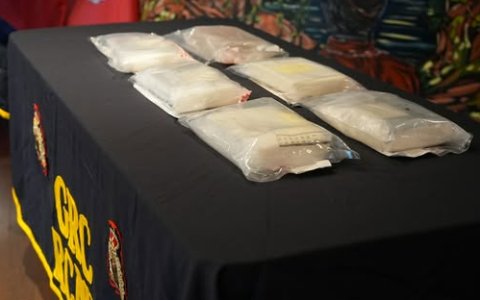
One of the most significant enforcement successes occurred on October 26, 2025, when a traffic stop in Behchokǫ̀ resulted in the seizure of five kilograms of cocaine and one kilogram of a cocaine buffing agent. The seizure carried an estimated street value of approximately $1.2 million. The accused was charged with possession for the purpose of trafficking and remains in custody awaiting trial.
By interdicting the shipment before distribution to smaller, remote communities, RCMP prevented a substantial quantity of illicit drugs from reaching communities already facing challenges associated with substance abuse, addiction, violence, and organized criminal activity.
This investigation highlights the critical role frontline officers play in disrupting trafficking networks that use the Northwest Territories highway system to move drugs into northern communities.
Supporting communities during wildfire emergencies
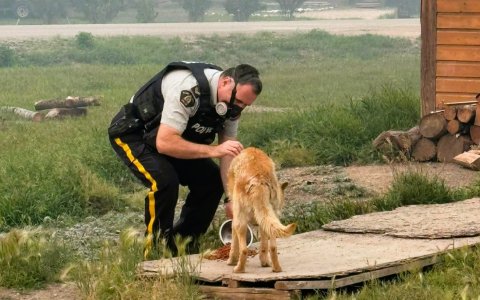
While enforcement remains a core RCMP responsibility, 2025 also demonstrated the organization's vital role in emergency management and community support.
In late August and early September, rapidly advancing wildfires threatened the communities of Whatì and Fort Providence. On August 29, 2025, Whatì was placed under an evacuation order, requiring approximately 500 residents to leave their community. Just days later, Fort Providence was also ordered to evacuate after a wildfire advanced to within approximately two kilometres of the community.
Throughout both emergencies, South District RCMP members worked alongside the Government of the Northwest Territories, Indigenous governments, municipal leaders, emergency management organizations, and community partners to support evacuation efforts and maintain public safety. Officers assisted vulnerable residents, facilitated transportation, provided reassurance to evacuees, secured evacuated areas, and helped ensure critical information was communicated quickly and effectively.
The response required rapid mobilization, close collaboration, and a strong commitment to service. Members continued to provide policing services while supporting emergency operations and helping residents navigate a highly stressful situation. Their visible presence helped maintain public confidence and contributed to the safe evacuation of hundreds of residents from communities facing an immediate wildfire threat.
Responding to the toxic drug crisis in Hay River
The South District's efforts to combat illicit drugs continued in Hay River, where officers took enforcement action during a growing public health crisis.
On November 8, 2025, Hay River RCMP conducted a targeted traffic stop on a vehicle believed to be involved in local drug trafficking after it was observed leaving a residence associated with the drug trade. The investigation led to the arrest of an Alberta man for possession for the purpose of trafficking and the seizure of approximately 14.2 grams of suspected carfentanil, approximately three grams of suspected cocaine, cash believed to be proceeds of crime, and other evidence of trafficking.
Although smaller in quantity than the Behchokǫ̀ seizure, the drugs involved posed an extraordinary risk to public safety. The investigation occurred just weeks after health officials confirmed the first detection of carfentanil mixed with powdered cocaine in the Northwest Territories. Carfentanil is an extremely potent synthetic opioid, estimated to be approximately 100 times more potent than fentanyl and 10,000 times more potent than morphine.
The seizure occurred amid an alarming increase in overdoses in Hay River. Community officials reported at least 15 overdoses over a short period, while emergency responders experienced unprecedented demand related to drug-related medical emergencies. Some overdose victims reportedly required multiple doses of naloxone to survive exposure to the contaminated drug supply.
By removing suspected carfentanil from circulation and disrupting local trafficking activity, Hay River RCMP contributed directly to ongoing efforts to reduce overdoses and protect vulnerable residents from one of the most dangerous substances encountered in the territory.
A commitment to safer communities
Together, these incidents demonstrate the breadth of work undertaken by the South District RCMP members every day. Whether preventing millions of dollars' worth of illicit drugs from reaching northern communities, supporting large-scale emergency evacuations during natural disasters, or responding to the evolving toxic drug crisis, members continue to make a meaningful difference in the lives of Northwest Territories residents.
Through enforcement, partnership, and service, the South District remains committed to protecting communities, reducing harm, and advancing the policing priorities established for the Northwest Territories.
Yellowknife District
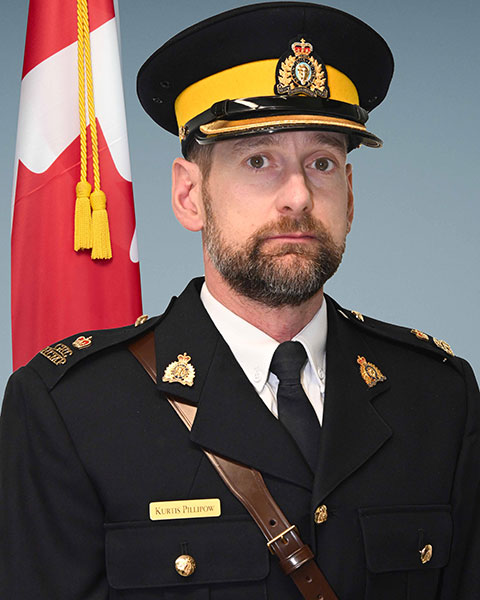
Officer in Charge, Yellowknife District
In 2025, the Yellowknife RCMP maintained a strong operational focus on proactive policing and investigative oversight. The detachment enhanced investigative quality through the launch of the Specialized Response Unit (SRU), which reviewed more than 70 files related to sexual offences and intimate partner violence. This unit ensured policy compliance, strengthened trauma-informed approaches, and provided oversight or direct carriage of investigations within its mandate, improving consistency and outcomes across cases.
Beyond specialized units, the Yellowknife Detachment continued targeting enforcement operations to address organized and street-level crime. Officers conducted 11 drug-related investigations, resulting in multiple charges and the seizure of approximately $33,000 in cash and significant quantities of illicit drugs destined for distribution in Yellowknife and surrounding areas. Additionally, the detachment recovered several firearms.
At the same time, road safety was a key operational priority, with 35 impaired driving investigations and 187 territorial fines issued for offences such as speeding and distracted driving. These enforcement actions reflect a sustained commitment to reducing high-risk behaviour on roadways, preventing collisions, and addressing the broader safety risks associated with impaired and unsafe driving across Yellowknife and surrounding communities.
Occurrences
| 2025 | 2024 | Change | |
|---|---|---|---|
| Occurances | 13,879 | 14,514 | -4% |
| Charges | 2,211 | 1,775 | +25% |
In 2025, Yellowknife District had a 4% decrease in total occurrences. The two most significant decreases in occurrence volume were a 13% decrease in crimes against property and a 9% decrease in other criminal code violations.
Crimes against persons and traffic violation occurrences both increased in 2025. Crimes against persons increased by 6% and traffic violation occurrences increased by 8%. Speeding violation occurrences in Yellowknife doubled since 2024. It is likely that the increase in traffic occurrences was influenced by traffic services unit conducting targeted patrols in and around Yellowknife.
In 2025, there was a significant increase in charges laid (+25%) in Yellowknife District despite the 4% decline in occurrences. The number of traffic violation charges increased by 62%. Charges for crimes against persons increased by 26% and crimes against property charges increased by 16%. CDSA charges also increased by 17% from 2024 to 2025.
Yellowknife General Investigation Section (GIS)
In 2025, Yellowknife General Investigation Section (GIS) was the primary unit assigned to 209 occurrences, 54 of which were generated by GIS investigators. GIS assisted in 79 Yellowknife Detachment’s general duty investigations. The GIS’ Specialized Response Unit (SRU) was assigned a mandate in 2025 to assist, monitor, and provide guidance to general duty members investigations of sexual violence, intimate partner violence, and child and elder abuse. GIS-SRU were involved in 173 investigations.
GIS investigated multiple crime types with a primary focus on crimes against persons. They investigated offences related to drug trafficking, proceeds of crime, firearms, sexual assaults, child sexual exploitation material (CSEM), child luring, sexual interference, indecent acts, thefts, uttering threats, obstruction of justice, frauds, cybercrime, and more. In 2025, GIS laid charges for drug trafficking offences, firearms offences, aggravated assaults, robberies, sexual assaults, sexual assaults with a weapon, extortion, and conspiracies to commit offences.
Specialized Response Unit (SRU)
The SRU expanded its investigative capacity by supporting complex and sensitive cases, including those involving child victims. It contributed to interjurisdictional investigations and led or supported 15 child forensic interviews since mid-2025. With a growing number of trained interviewers, the detachment has improved its ability to handle specialized investigations requiring expertise, coordination, and victim-centered approaches.
Notable investigations / events
Impaired collision
One of the most notable files investigated by Yellowknife RCMP, which attracted significant international media attention, stemmed from a serious impaired driving incident at the Explorer Hotel on December 24, 2025. RCMP responded after a vehicle crashed through the hotel’s lobby entrance in a densely populated area, injuring multiple civilians and ultimately colliding with the interior elevator system, trapping six people inside. CCTV footage revealed the driver suddenly veered and accelerated into the hotel entrance, striking two pedestrians outside before continuing into the lobby and hitting two additional victims. Witnesses immediately reported signs of driver impairment, and the ensuing investigation resulted in breath samples more than three times the legal limit. The incident caused approximately $1 million in damage to the hotel, including catastrophic damage to the elevator system, which was rendered inoperable and significantly impacted the hotel’s ability to accommodate medical patients, resulting in ongoing revenue losses. Due to the severity of the event, the number of victims involved, the extensive property damage, and the public safety concerns surrounding impaired driving, the investigation received widespread national and international media coverage. The accused remains before the courts, and the hotel is still under repair seven months after the incident.
Drug investigation
A significant success of the Yellowknife Detachment’s General Investigation Section (GIS) was a Controlled Drugs and Substances Act (CDSA) investigation targeting drug trafficking activity at Grayling Manor. GIS conducted an extensive investigation and identified three interconnected units being used to store and distribute controlled substances. Through coordinated investigative efforts, members obtained search warrants for all three units and, with the assistance of a full G Division Critical Incident Program executed the warrants on November 30, 2025. Approximately 15 individuals were arrested during the operation, with six transported to the detachment for processing, interviews, and subsequent criminal charges. The operation resulted in the seizure of approximately $20,000 in cash, a loaded Glock handgun equipped with an extended magazine, and a quantity of crack cocaine. This investigation demonstrated investigational effectiveness in disrupting organized criminal activity, removing an illegal firearm from the community, and enhancing public safety through proactive enforcement and intelligence led policing.
Firearm offence and agency collaboration
The Yellowknife RCMP demonstrated a swift and coordinated response when officers received a report of a male at a local shelter who was believed to be in possession of a firearm. Members quickly attended the location, safely located the suspect, and took him into custody without incident, ensuring the safety of shelter residents, staff, and the surrounding community. During the investigation, officers seized a firearm equipped with an extended magazine from the suspect’s belongings. Subsequent tracing efforts revealed the firearm had been reported stolen from Texas, USA, in 2020, highlighting the complex nature of illicit firearm trafficking and the importance of proactive enforcement. Beyond the immediate criminal investigation, which remains before the courts, Yellowknife RCMP collaborated with partners at the Northwest Territories Health and Social Services Authority (NTHSSA) to review and strengthen their response protocols for armed person incidents, including practicing and refining their "Code Silver" procedures. This collaborative approach enhanced community preparedness and demonstrated the RCMP’s commitment to both public safety and continuous improvement in emergency response planning. This firearm seizure was one of 53 seized by the Yellowknife RCMP in 2025.
Operational Communication Centre (OCC)
OCC Commander
The 2025 year marked a significant period of growth and transformation for G Division Operational Communications Centre (OCC) as it re-aligned under the Criminal Operations Branch. This strategic shift enabled a more cohesive operational support structure for frontline members and strengthened overall oversight within the centre. It improved coordination and ensured that the OCC was better positioned to respond effectively to evolving operational demands. 2025 was a busy year with the OCC team receiving 152,533 calls into the centre and creating 39,111 occurrences.
Northwest Territories G Division OCC staff
- 1 manager
- 4 supervisors
- 16 dispatchers
Key technological enhancements were introduced to improve officer safety and situational awareness. The re-activation of SKYTRAC provided real-time tracking of G Division air staff during travel, while the implementation of Blue Force Tracking systems, including WinTAK and ATAK, allowed for more accurate monitoring of members and operations across the Northwest Territories.
Operational improvements were further supported through the introduction of new policies and standard operating procedures designed to enhance service delivery to residents of the Northwest Territories. A notable advancement was the OCC assuming responsibility for all RCMP-related hang-up calls originating from the GNWT 911 centre. Hang-up calls are now transferred to the RCMP OCC, where a file is being created, and officers are tasked to verify the safety of the caller. This change represents a significant improvement in public safety response. Overall, the call volume remained steady throughout 2025, but there was a noticeable increase in Priority 1 and 2 calls—reflecting both improved call prioritization practices and a broader rise in serious incidents, including those linked to drug activity.
Staffing and training remained a central focus throughout the year, addressing a long-standing challenge within the OCC. By the end of fiscal year 2026, seven trainees were enrolled in the National Telecommunications Operator Training Program, with projections indicating the addition of at least five new dispatchers in the coming year—bringing staffing levels to their highest point in five years. The OCC also achieved a milestone by hosting trainees from Nunavut for the first time and establishing an in-house Training Coordinator/Facilitator position to support ongoing development.

Looking ahead, the upcoming year presents exciting opportunities, including the planned implementation of RapidSOS technology to enhance the ability to locate callers in need. Additionally, a targeted advertising campaign tied to a new training class beginning in January 2027 was launched in June 2026, aiming at recruiting and developing talent from within the Northwest Territories, further strengthening the OCC’s capacity and community connection.
Support Services
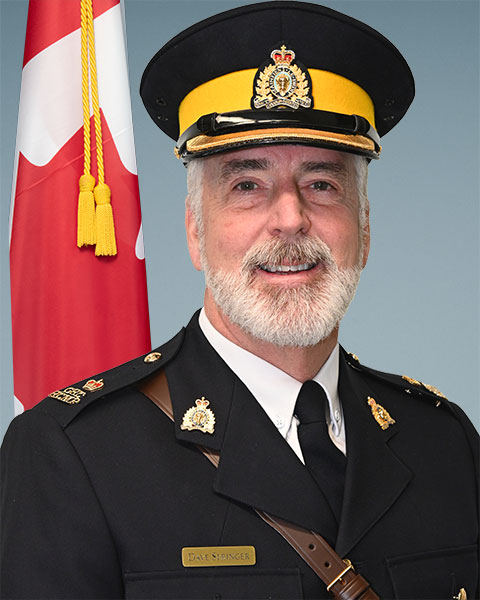
Officer in Charge, Support Services
RCMP G Division Support Services provides specialized operational, investigative, intelligence, forensic, and community policing support to every community and detachment across the Northwest Territories. Operating across one of Canada’s largest and most geographically challenging policing environments, Support Services enhances frontline policing by delivering expert resources, advanced investigative capabilities, and critical operational assistance. From major crime investigations and emergency tactical responses to forensic examinations and intelligence analysis, these specialized units ensure that detachments throughout the NT have access to the expertise required to address complex and evolving public safety challenges.
The breadth of Support Services reflects the diverse policing needs of the North. Together, Support Services units contribute to successful investigations, proactive enforcement initiatives, and coordinated responses to incidents ranging from homicides and drug trafficking to cyber-enabled crime and high-risk tactical operations.
Beyond enforcement and investigations, G Division Support Services plays a vital role in building safer and stronger communities across the Northwest Territories. Community and Indigenous Policing Services fosters partnerships with Indigenous governments, community organizations, and residents through engagement initiatives, cultural awareness activities, and youth programs. Air Services ensures rapid deployment of specialized resources and personnel to remote communities across the territory, enabling timely operational support wherever it is needed. Through collaboration, innovation, and specialized expertise, the RCMP G Division Support Services remains committed to supporting frontline policing operations and enhancing public safety for all residents of the Northwest Territories.
Internet Child Exploitation Unit
The Internet Child Exploitation Unit (ICE) provides investigative support on all ICE related investigations in the division. ICE provides support to detachments on judicial authorizations specific to electronic devices, electronic evidence preservation, and mobile device seizures. ICE takes the lead investigative role in all investigations received through the National Child Exploitation Crime Centre (NCECC), other ICE units in the country and international joint investigations. They also liaise with international police agencies, internet service providers, and electronic service providers.
In 2025, ICE was the primary investigative unit on 35 files and assisted detachments on 19 investigations. There was a decrease in ICE investigations from 2024 to 2025. The change in electronic service provider mandatory reporting and increased encryption on electronic service provider platforms has reduced companies’ reporting of criminal activity. ICE members are also responsible for remaining current with evolving technologies, training and professional development, while balancing members’ mental health despite exposure to child exploitation content.
Emergency Response Team
The Emergency Response Team (ERT) is comprised of seven full time positions providing specialized tactical support to the NWT. In 2025, the team responded to 49 calls for service / deployments across the NWT. In 2025 and 2024, calls for service have remained consistent at 49. A significant increase in the number of ERT deployments was observed between 2022 (20 deployments) and 2023 (42 deployments). Deployments included calls for hostage rescue, armed and barricaded situations, high-risk search warrant executions in the NWT, and VIP duties. ERT continues with interoperability training with the Police Dog Service as well as supporting tactical training across the Division.
Major Crime Unit
In 2025, G Division Major Crime Unit (MCU) investigated five homicides and deployed to a variety of suspicious deaths, and sensitive investigations assigned by Criminal Operations. MCU also brought charges against three individuals in relation to a complex 2022 homicide. Many of the homicides in the Division have a drug trade and organized crime nexus, which presents unique investigational and resourcing challenges. Investigators engaged in significant out of territory travel including trips to Montreal, Edmonton, and Kelowna, to conduct follow-up interviews and arrest suspects. MCU currently has carriage of and actively investigated two unsolved homicides throughout 2025. MCU expects a continued increase in deployments and complexity of investigations as drug and organized crime groups continue to operate in the Northwest Territories.
Traffic Services Unit
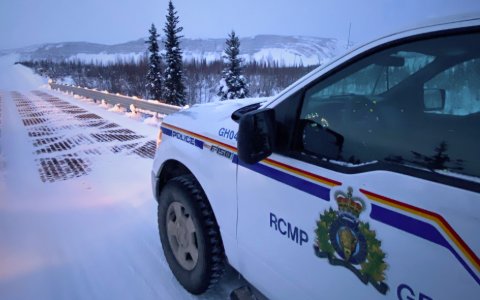
Traffic Services operations focused on the Divisional priority of maintaining road safety in the Northwest Territories. The Traffic Services Unit laid 242 charges under the Motor Vehicle Act, including five impaired driving charges and six administrative license suspensions. Traffic Service begun the year with a single member and ended 2025 with four out of five positions staffed.
The unit engaged in targeted proactive enforcement in high-risk areas and daily patrols on highways 1,2,3,4, and 6. The team further supported school zone patrols during peak travel periods. The team has supported and provided primary investigative work on four criminal collision investigative team files. Traffic Services held a joint South District enforcement operation alongside the Territorial Crime Reduction Team and conducted check stops at the Hay River/Fort Smith junction and the Alberta border. Traffic services members provided 56 days of relief duties throughout G Division and attended multiple community engagement events in various communities. They also led a National RCMP pilot related to the use of Low Earth Orbit satellite connectivity for vehicle mounts in the challenging NWT winter climate. Traffic services remain committed to reducing unsafe driving behaviours and improving road safety.
Divisional Crime Analysis Section
The G Division Criminal Analysis Section (DCAS) is engaged on both Territorial Contract and Federal files. DCAS produces relevant and actionable intelligence products in relation to the ongoing trend of organized crime networks expanding from the southern Provinces into the NWT. DCAS engages partners both domestically and internationally to ensure accurate reporting, and provides timely support to Federal and Territorial units, and numerous detachments throughout the Division. DCAS creates tangible intelligence that has resulted in investigational, operational, and judicial successes.
Police Dog Services
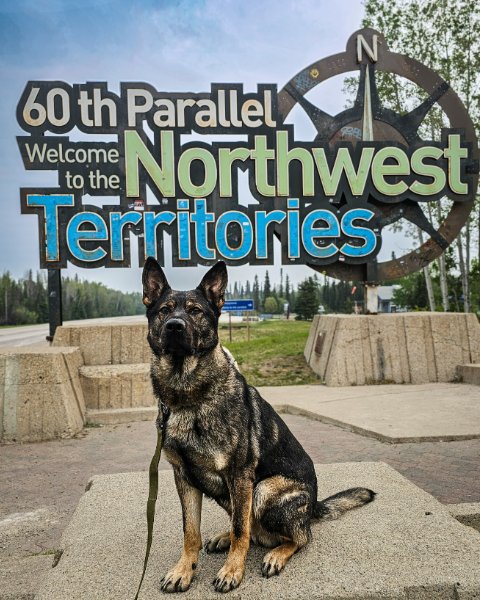
Police Dog Services (PDS) were engaged in 332 files in 2025. PDS attended 22 Emergency Response Team (ERT) deployments and offered 10 PDS demonstrations to the public and schools. As of May 2025, PDS comprised a single police dog and handler team. PDS engaged in regular joint training exercises with ERT to enhance interoperability in various environments. In 2025, PDS has attended calls and community visits in 14 of 21 (67%) G Division detachments. The top five detachment areas with the most PDS files were: Yellowknife (249), Hay River (28), Fort Providence (22), Behchokǫ̀ (22), and Inuvik (8).
Forensic Identification Services
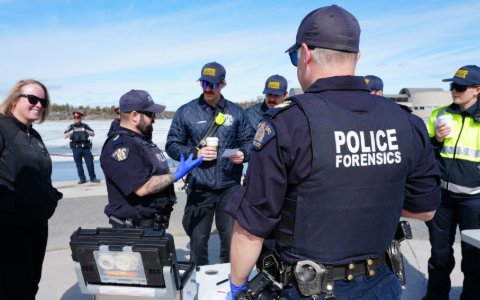
Forensic Identification Services (FIS) examine crime scenes and exhibits from persons offences and property crime investigations. FIS assisted on multiple file types including CDSA, Mischief, Break and Enter, Arson, Robbery, Assault, Sexual assault, Aggravated assault and Homicide. In 2025, FIS saw a continued increase of firearm examinations, particularly an increase in handguns. Consistent with previous years, FIS attended five homicides and several sudden deaths.
FIS assisted detachments throughout the Division to process scenes, examine exhibits, and provided guidance and education on best practices related to crime scene examination, management, protection, exhibit handling, and DNA collection. G Division FIS maintained a higher rate of evidence located per scene than the national average.
Historical Case Unit
The Historical Case Unit (HCU) investigates historical unsolved homicides, suspicious deaths, and missing persons. As of December 2025, HCU’s caseload comprised 83 files. Most of HCU’s investigative efforts this year were dedicated to 7 seven unsolved homicide files. In 2025, HCU has balanced investigative tasks and significant administrative tasks of organizing newly digitized files and collating historical data.
Territorial Crime Reduction Unit
In 2025, Territorial Crime Reduction Unit (TCRU) members were involved in 130 investigations across the Division. The investigations included proactive CDSA investigations and locating and arresting priority offenders. TCRU deployed to detachments across North and South Districts throughout the year. TCRU members actively networked and developed professional relationships with GNWT Probation Services, Correctional Service of Canada Parole, and Specialized Courts, which lead to the quarterly stakeholder meetings to discuss priority offenders.
TCRU were involved in multiple notable files in 2025, including investigation and recovery of a re-VINed vehicle in Yellowknife; assistance to Fort Smith RCMP with CDSA search warrant and seizure of 11 ounces of cocaine; surveillance in Fort Providence which led to obtaining and executing a search warrant in which firearms and cocaine were seized; a firearms investigation in Fort Resolution during which a loaded handgun was recovered; and Project Gargoyle, a proactive CDSA investigation in Yellowknife during which both CDSA and weapons charges were laid.
Financial Crime Unit
The Financial Crime Unit investigates complex frauds and assists in the prevention of frauds through public awareness. In 2025, FCU focused on reviewing and prioritizing historical financial crime files. FCU is the primary point of contact for CRATS, Cryptocurrency, Cybercrime, and financial crime inquiries. FCU were engaged in multiple fraud and theft investigations, including a misuse of funds investigation and a Health and Social Services fraud investigation that led to a fraud charge. FCU also provides guidance and consultation to detachments and other government agencies.
Community and Indigenous Policing Services
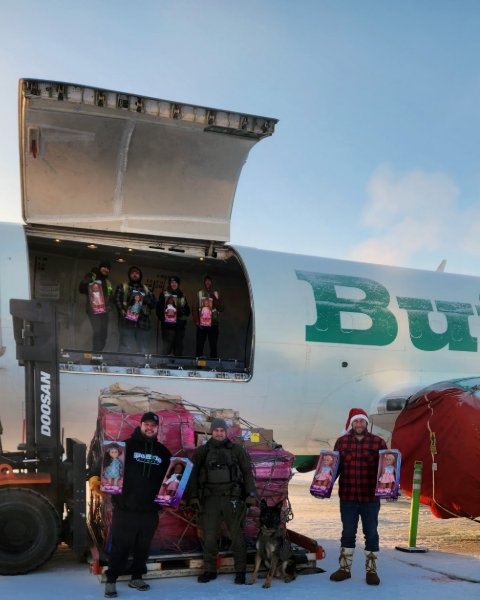
Community and Indigenous Policing Services (CIPS) members attended the Annual General Meeting for the Northwest Territory Metis Nation and the Dehcho First Nations, including the Dene Nation drug and crime prevention meeting in May. CIPS hosted the Commanding Officers Indigenous Advisory Committee members in April and November 2025. CIPS attended numerous recruiting and community events across the NWT, and promoted RCMP careers, engaged with the public and shared promotional products.
CIPS members joined the Mackenzie River boat patrol from Fort Simpson to Norman Wells and back, where they conducted community visits and boat safety presentations with the youth in the communities along the river. In the spring and fall, CIPS hosted a day camp where the employees were invited to come learn and assist with traditional moose hide tanning and eat traditional food. CIPS also organized the Toys 4 North program for G Division, where they partnered with Buffalo Airways to delivery 15 pallets worth of toys to the majority of the communities across the NWT.
National Sex Offender Registry
The National Sex Offender Registry Unit (NSOR) maintains a database that contains up to date information on Registered Sexual Offenders (RSO) to prevent and assist with the investigation of sexually motivated crimes. NSOR is currently working on a Memorandum of Understanding with the Government of the Northwest Territories Corrections Service to obtain real time offender information across the Territory. As of June 2025, RCMP members can submit offender registrations electronically directly to the NSOR, streamlining the process and lending to accurate capture of the information. Nationally, NSOR has launched the High-Risk Child Sex Offender Database however, currently, there are no offenders who meet the criteria for inclusion from the NWT.
Air Services
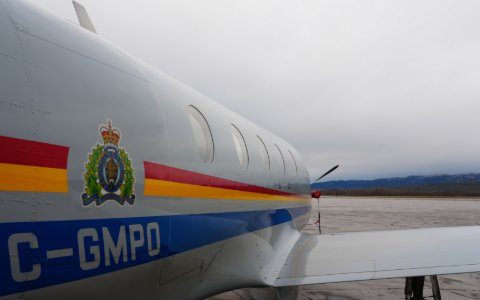
Air Services provided air travel services across the Northwest Territories for tactical deployments of the Emergency Response Team, Forensic Identification Services and Police Dog Services.
Air Services also support prisoner escorts, site visits, and the transport of technical support personnel to all detachments. In 2025, Air Services logged 142 flying days for a total of 585.6 flight hours. Air Services logged 73 maintenance days, 31 standby days, and 119 offline days. The new PC-24 aircraft is expected to arrive in G Division in the fall of 2026. Pilots are currently undergoing training for the new aircraft.
Concluding remarks and looking ahead
As we reflect on the accomplishments and challenges of 2025, it is clear that RCMP G Division remains committed to protecting the people and communities of the Northwest Territories through professional, intelligence-led, and community-focused policing. While crime trends continue to evolve and complex public safety issues such as organized crime and illicit drug trafficking remain priorities, the dedication and resilience of our employees have resulted in meaningful operational successes across the territory.
As we move into 2026, G Division will continue to build on these successes by strengthening partnerships, embracing innovation, and remaining responsive to the changing public safety landscape. I extend my sincere appreciation to all our employees and partners for their dedication and service, and to the residents of the Northwest Territories for their continued trust and support.
- Date modified: